January and February are always when we are busy discussing formalwear for special occasions that come up in May, June and July. These conversations have me reflecting on some of the frequently asked questions customers have about special occasion orders. I've written out five tips to consider if you are thinking of placing an order (see the bottom of this blog post), but there's lots more to say on the topic of formal tailoring.
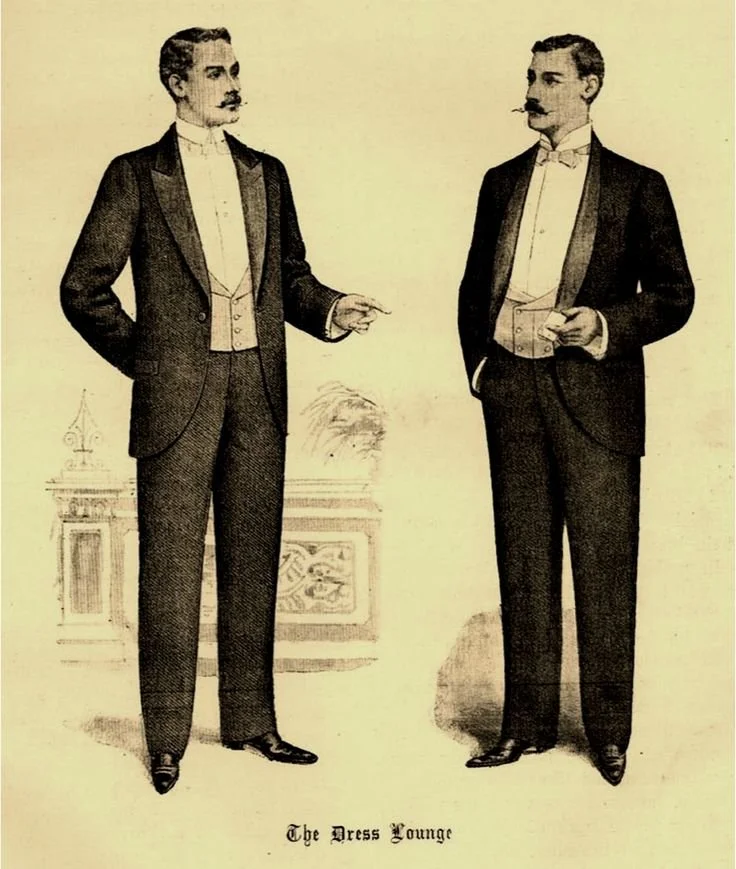
1880’s Diner Jackets
The History of a Tuxedo
Believe it or not, a tuxedo or dinner jacket evolved from a smoking jacket and it was originally considered an informal way of dressing. Men were once prohibited from wearing tuxedos in the presence of women. In the 1880s, when a dinner jacket became popular in America – and in particular around the village of Tuxedo Park in New York State – men started wearing them as a form of rebellion, a move away from more formal and less comfortable tail coats. This is where the name "tuxedo" comes from.

C. 1900 on the left is a body coat with a waist seem and on the right a sack coat with no waist seam
What is a Tuxedo?
A tuxedo is technically a type of sack coat. A modern day suit jacket and blazer are technically also sack coats. These are more casual garments than a body coat. A body coat is a formal coat with a skirt or tails and cinch into the waist more (they were originally cut tight and short across the back to force you into a very upright posture).

c.1900 A frock coat, a variation of body coat where the waist seam can be clearly seen. You will also note the characteristic series of pleats on found on the back of body coats.
Sack Coats and Body Coats
The simplest way to think of it is a body coat has a horizontal or waist seam and a sack coat does not. Variations of body coats are what were worn for business, dinner gatherings and formal events. Sack coats were for lounging, smoking and hunting.
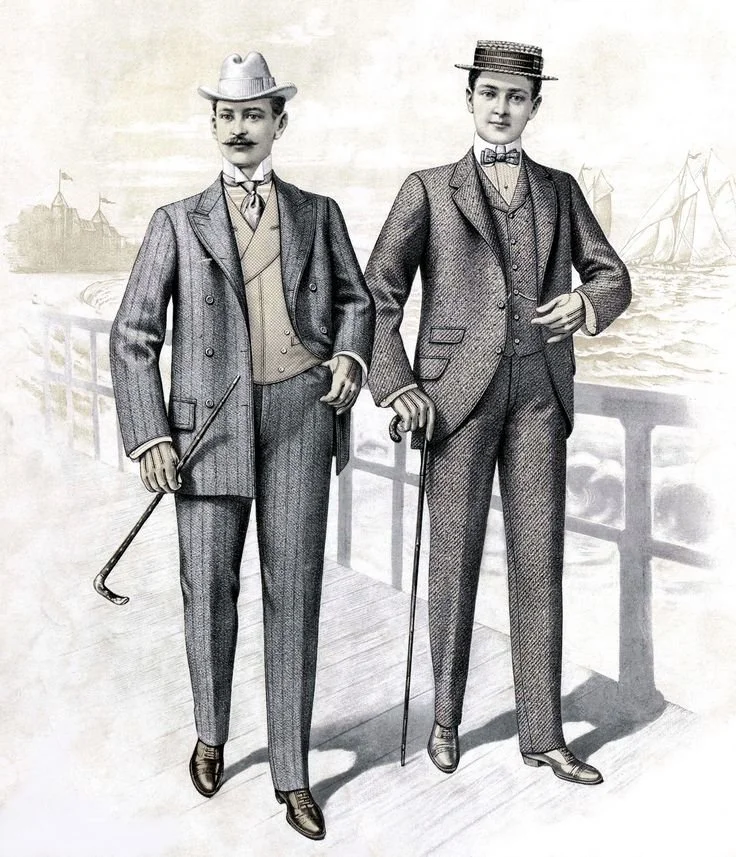
C. 1890’s Sack coats
A modern tuxedo merges formal and informal elements from traditional sack coats and body coats. Details like silk lapels were taken from body coats and applied to sack coats. A vent (needed to ride horses) was removed to create a more formal silhouette. This produced a trimmer fit around the hips.

Bespoke Double Breasted Tuxedo with a notched collar. This is a great example of classic tuxedo fabrication, with a matte pebbled textured self material and a lustrous silk lapel. Made in the Philip Sparks Toronto Tailoring Studio
What Makes a Tuxedo Different From a Suit?
What makes a tuxedo different from a regular suit is the presence of silk on the lapels, this trimmer fit over the hips and the Y-shaped silhouette that it can produce. You might also find silk on the buttons, the lips of welt pockets, on the trousers as a stripe down the leg, and on the waist band.
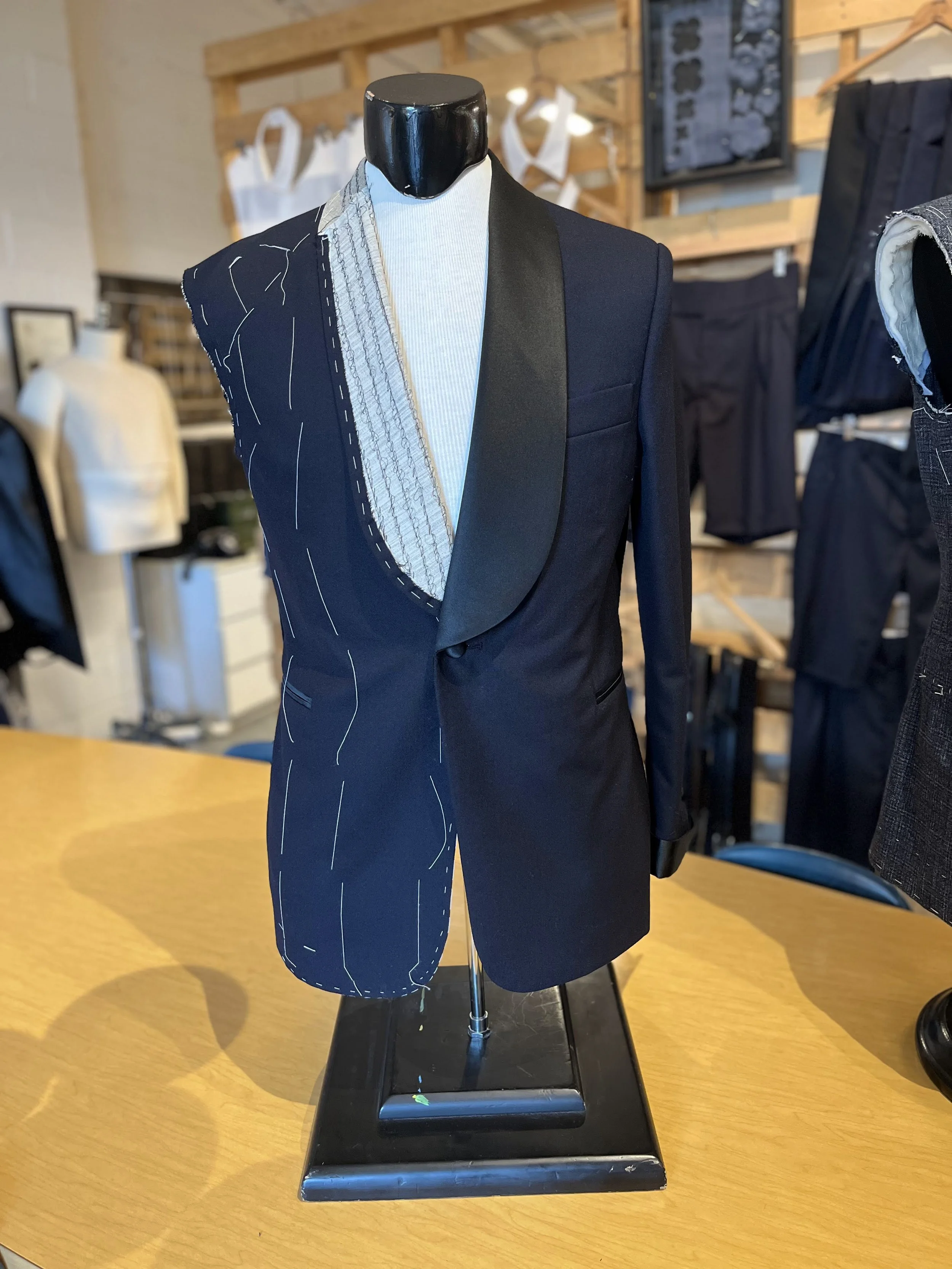
Sample Bespoke Single Breasted Shawl Collar Tuxedo, in a classic fabrication. Made in the Philip Sparks Toronto Tailoring Studio
Tuxedo Styles: Lapels, Silhouettes and Construction
A tuxedo can be cut single breasted, with wide peaked lapels and a longer, cut away forepart, or it can be cut double breasted, with a shawl collar. In 2026, a tuxedo can include any combination of all of these elements and even veer away from a trim silhouette to something more relaxed.

Boys Bespoke Double Breasted, Shawl Collar Tuxedo in cream, paired with a contrasting trouser. Made in the Philip Sparks Toronto Tailoring Studio
Tuxedo Fabrics and Colours
Generally, the all over cloth of a tuxedo is in a solid black or midnight navy cloth called barathea and sometimes crepe. These cloths have a matte pebbled surface that contrasts well with lustrous silk used elsewhere on the piece. Tuxedos are also common in white, usually paired with contrasting black trousers.
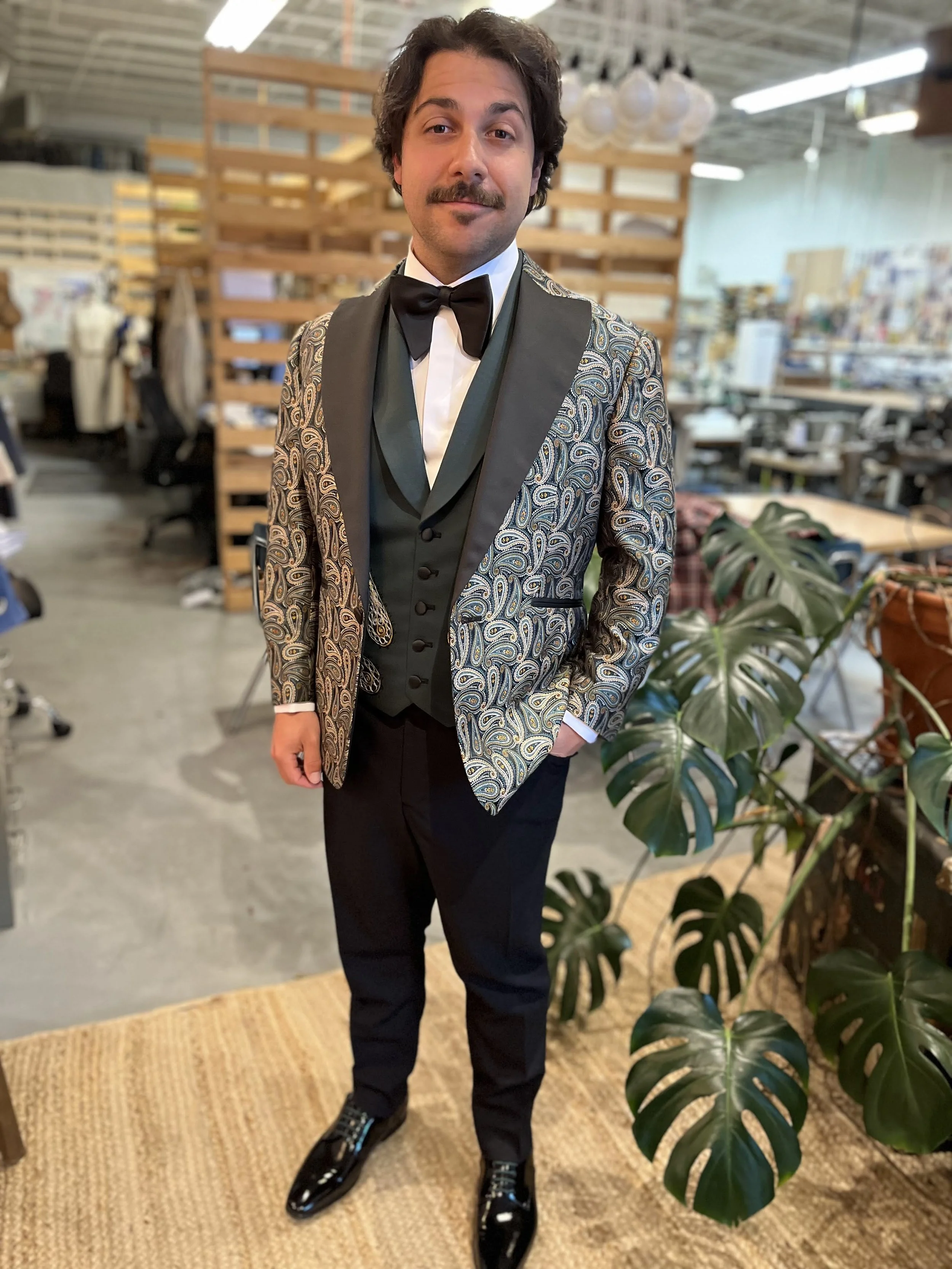
Variation on a Bespoke Tuxedo in a Brocade Cloth with Contrasting Vest and Trousers all made in the Philip Sparks shop. This jacket is single breasted with a peaked collar.
Just as silhouettes have loosened up, today's tuxedos can be made in any colour of the rainbow, plaids, stripes and textured cloth. It all depends on your comfort level and how you would like to express yourself. Here at the shop, we will help you find what suits you best.
5 Things to Consider When Ordering a Bespoke Tuxedo
Here are some tips if you’re thinking about placing an order:
1. Allow 10–12 Weeks for a Bespoke Tuxedo
Allow as much time as you can. A tuxedo is a 10 to 12 week process and involves you visiting us at the shop for a consultation and four fittings. While a rush can sometimes be accommodated, it may come with added costs and, as wedding season approaches (beginning in early February), the sooner you make your first visit, the better. Plan to give us time, so that we can use it to make your special pieces the best we can.
2. Choose the Tuxedo Details That Suit You
We make our pieces entirely from scratch, and this means your choices are endless. Don’t be overwhelmed. We can walk you through the details and help you make decisions, but also know that we make magic happen. We can bring to life ideas that you have without limiting you to a set menu of details or options. So whether it’s peaked or shawl lapels, single or double breasted, silk lapels or not, we will make it work for you. All of the proportions and fit are adjusted to you the body in our fitting process.
3. Choose the Right Tuxedo Fabric
Materials matter. Our Ruby Room Fabric Library makes it easier. There are lots of great stock options that we have available for you to choose from. This lets us look at drape and body of a fabric as well as see it in a larger piece. Not finding what you want in our stock? We have an extensive library of swatch books full of premium fabrics. For a classic, formal tuxedo, we like to look to a fabric called baratheas. Its slightly pebbled surface contrasts well with the lustre of a silk label. If you want to look like a rock star, try a shot mohair or sharkskin cloth made with goat hair. These cloths offer a slight iridescence along with the coolness of what you might expect from linen but without the wrinkles. If you want something really different, we offer cloths custom woven in Pairs. These come in every imaginable colour and pattern.
4. Tuxedos Are for Every Gender and Body Type
Tuxedos aren’t just for men. We make garments for any gender and any body type to suit your preferences, whether that’s a looser fit of something more body conscious.
5. Design Your Tuxedo to Be Worn Beyond One Occasion
Formal wear is not just for one occasion. There are many occasions for formalwear. When you come into to talk to us about the needs for your special occasion, we will also talk with you about ways to make the most of your pieces beyond a single wear. Mending and alterations are on us through the life of the piece and things like additional seam allowances are included in the pieces. They are designed to be adapted as your body changes over time.
