A Guide to Overcoat Styles, Construction & Materials
A good winter overcoat is one of the most useful pieces of clothing in a Toronto wardrobe. At Philip Sparks Tailored Goods, we make bespoke overcoats in a wide range of styles, from traditional town coats and Chesterfields to Balmacaans, car coats, pea coats and more unusual historical and contemporary designs. In this Talking Tailoring workshop, we explored the styles, practical details, construction and materials that go into making a warm and lasting overcoat.
We hosted another great workshop on Nov. 7, this one focused on overcoats. I hope I’m not to blame for the early onset of winter, but, wow, was the timing right on for this workshop. Toronto was hit by its first blast of winter snow the following day

Craig, a tailor a Philip Sparks demonstrating a vintage fur sewing machine in the Toronto studio
We love making overcoats and, from what I’ve read on international tailor forums, we are pretty lucky that we get so many commissions every year. I give some credit to the Toronto climate for our specialization in this area. The need for a good winter overcoat in Toronto extends for almost six months out of the year. They are our favorite garments to create.
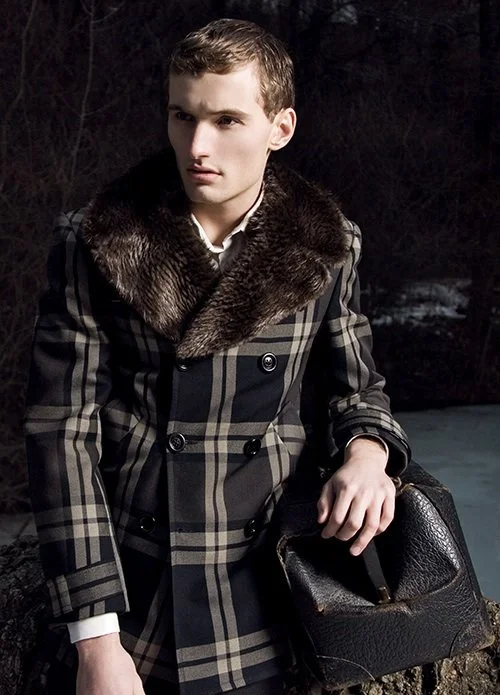
Peacoat variation made in the Philip Sparks Toronto studio
Overcoat Styles
One of the reasons we love making overcoats so much is because there are so many options. Yes, there are lots of suit styles as well, but our community seems to have a broader idea of what they like in a piece of outerwear, which means we get to have a lot of fun.

Craig, a tailor at Philip Sparks in a Blanket coat he made in our Toronto studio
Blanket Coats
are as Canadian as they get. These simpler, long, wrapped coats – usually with a hood – are, you guessed it, made from blankets. We have created a fair number of them including the one pictured here that Craig made for himself from a vintage Swiss army blanket.

Brandon in a bespoke town coat made in our Toronto studio
Town Coats
are the opposite of a blanket coat. They are made to wear over a blazer, can range in length from knee to mid-calf, and can be single or double breasted. They almost always sport a structured shoulder, a roped sleeve and can have a peaked or notched lapel.

Peter in a bespoke peacoat made in our Toronto studio
A Pea Coat’s
origin is in the navy, and they are traditionally navy blue in colour. These coats are usually cut mid-thigh and double breasted with a higher break, a wider lapel, and collars that are rounded at the corner. While you can’t go wrong with a classic version, there are many possible variations of this style.

A Chesterfield made in our Toronto studio with a leather collar instead of the traditional velvet
A Chesterfield
is tougher to define. I see them as single or double breasted and in a variety of lengths. The main feature is a top collar cut in a different cloth, usually in a black velvet but, in the case of the coat pictured here, leather works too.

Philip in a bespoke car coat made in our Toronto studio
A Car Coat
is my personal favorite coat style. Cut to shelter you, these long loose coats accommodate many layers and are meant to keep you warm for extended periods in the cold. You might also sometimes hear them called stadium coats, in reference to historical illustrations showing them being worn at outdoor sporting events in colder weather. They were originally made for cars that did not have enclosed cabs. They are also usually double breasted with an even wider, pea coat-style collar, usually with back belts that let you cinch in extra material when you aren’t wearing as many layers. The one pictured here is my own, made in the shop. It is my personal favorite item of clothing. It gives me something to look forward to when the temperature goes below minus-20.

Andrew in a bespoke Balmacaan coat with raglan sleeves, made in our Toronto studio
Balmacaan Coats
are named after a place in Scotland. They are usually made of tweed cloth in slightly lighter weights than some of our heftier deep winter overcoats and are usually only partially lined. Key features of a Balmacaan are its raglan sleeve and convertible style of collar. Did you know that a raglan sleeve is named after Lord Raglan, who needed a coat sleeve that was easier to put on after losing an arm in battle. This sleeve style was developed for him to make a coat easier to put on and take off.
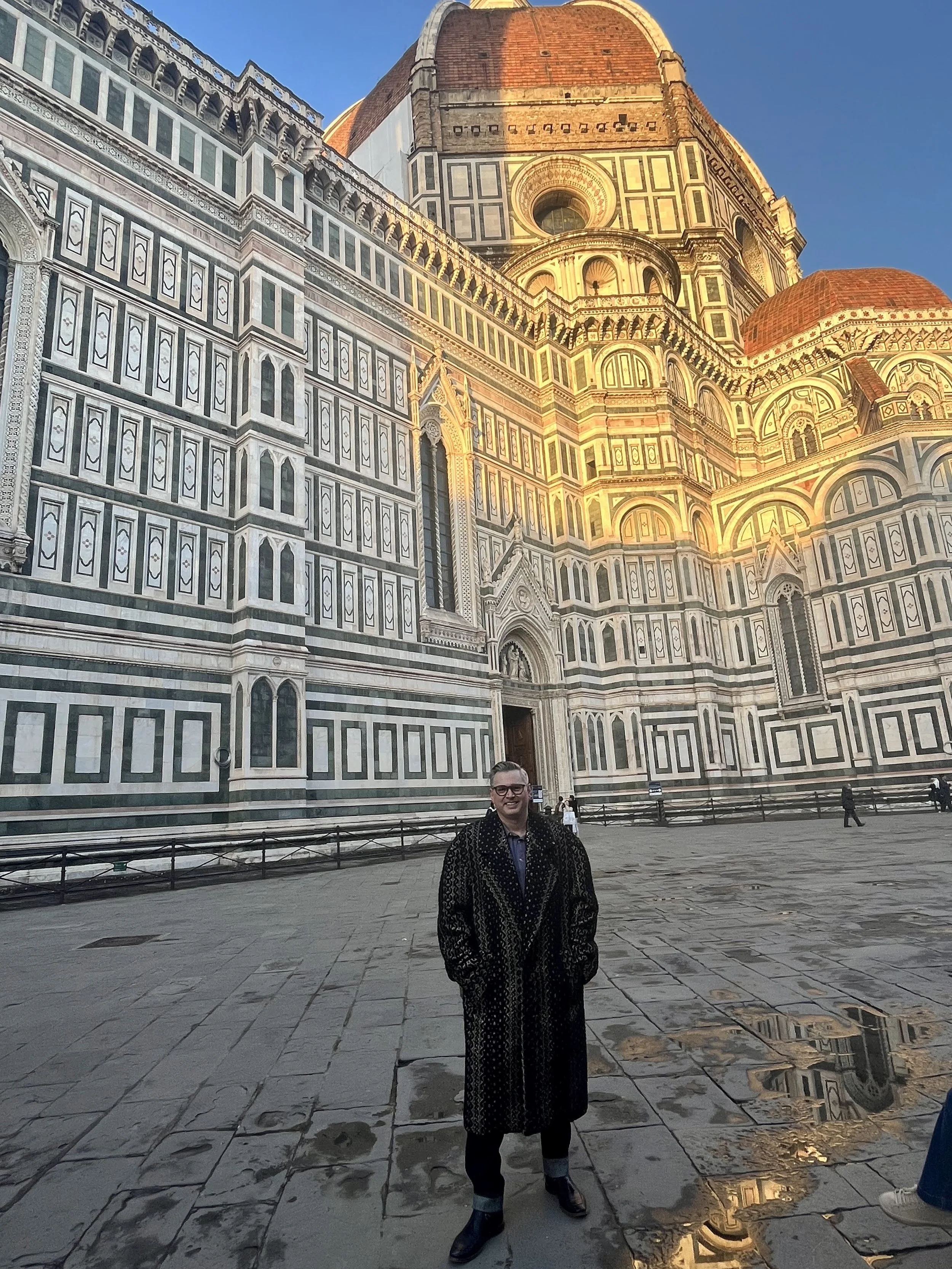
Philip in an bespoke novelty coat made in our Toronto studio
I could go on. At the talk, we also discussed duffle coats, work coats, capes, cloaks, opera coats and fashion coats, all of which are items we produce in the shop
Practical Details for a Winter Overcoat

Back belt detail on a bespoke car coat made in our Toronto studio
There are many other practical details that we put into overcoats. Storm tabs are common elements at the cuff or collar of an overcoat, allowing you to button up at the neck or tighten things up at the sleeve to block wind. Collars that pop are something a client should request. We can shape wider under collars so that the collar still sits neat and high to the back of the neck when worn down, but when popped it fits around the back of the head and chin. Back belts are great ways to nip in the waist or to let a coat out in the waist as extra under layers are required in colder weather. Another practical detail is a button in the back vent that can be done up on a blustery day.
Bespoke Overcoat Construction

Tom a tailor at Philip Sparks, demonstrating how to baste (or hang) a canvas into a bespoke overcoat
Tom delivered a great demonstration of how a canvas is basted into a coat front and we discussed the variety of weights of canvas that can be used to increase or decrease the weight of an overcoat. We talked about the Canadian-made, flannel-backed Kasha linings that we add to coats for extra warmth, about flannel lined pockets and suede backed liners that keep the wind off your kidneys.
Winter Overcoat Fabrics & Materials

Overcoat materials on display at the Philip Sparks Toronto tailoring studio
We talked about the various tweeds and woolens that are appropriate for overcoats but, most importantly, we talked about wool’s ability to felt. Melton, for example, is a cloth that has been woven and then boiled (or fulled) and felted. This makes a cloth that is very dense and heavy and blocks more wind. We also explored other fibres like camel hair and cashmere that make for luxuriously soft and warm overcoats.
Fur Liners, Collars & Bespoke Overcoat Details

A detachable fur liner in a bespoke car coat made in the Philip Sparks tailoring studio
Craig shared a demonstration of how fur is cut with a special knife from the back side so as not to cut the hair. We also had a demonstration of how fur is pieced together and sewn to appear seamless using our vintage Bonis Never Stop fur sewing machine. We talked about how old furs can be recycled and the joys of accessories that can be added to an overcoat like detachable fur collars, mitts, gloves and removable inner fur vest.
If you want to explore your options for a bespoke overcoat or other outerwear, book a consultation with our Toronto tailoring studio. We can discuss the style, cloth, construction and details that will make the right coat for you.
