Winter is Coming

A Guide to Overcoat Styles, Construction & Materials

A good winter overcoat is one of the most useful pieces of clothing in a Toronto wardrobe. At Philip Sparks Tailored Goods, we make bespoke overcoats in a wide range of styles, from traditional town coats and Chesterfields to Balmacaans, car coats, pea coats and more unusual historical and contemporary designs. In this Talking Tailoring workshop, we explored the styles, practical details, construction and materials that go into making a warm and lasting overcoat.

We hosted another great workshop on Nov. 7, this one focused on overcoats. I hope I’m not to blame for the early onset of winter, but, wow, was the timing right on for this workshop. Toronto was hit by its first blast of winter snow the following day

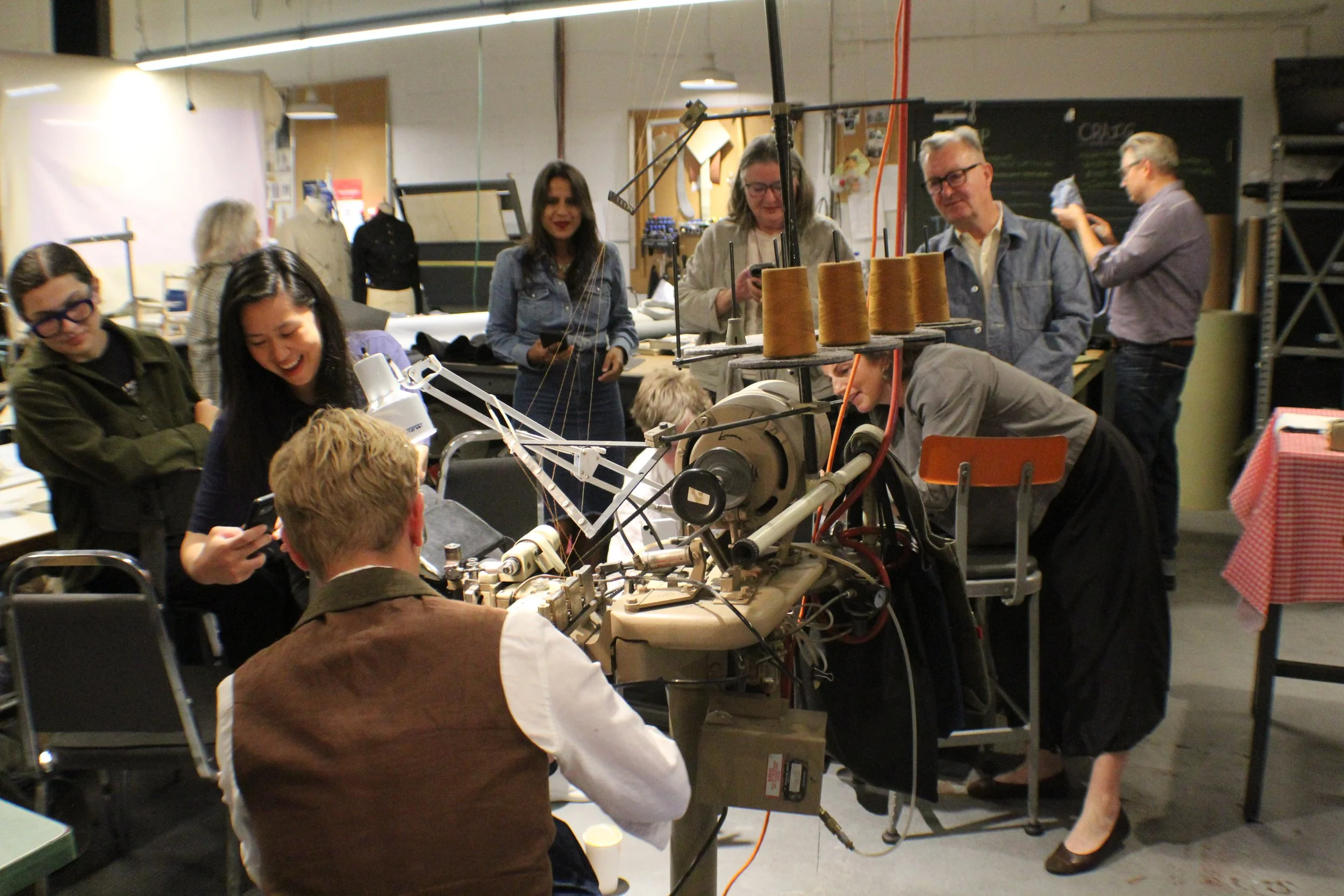
Craig, a tailor a Philip Sparks demonstrating a vintage fur sewing machine in the Toronto studio

Craig, a tailor a Philip Sparks demonstrating a vintage fur sewing machine in the Toronto studio

We love making overcoats and, from what I’ve read on international tailor forums, we are pretty lucky that we get so many commissions every year. I give some credit to the Toronto climate for our specialization in this area. The need for a good winter overcoat in Toronto extends for almost six months out of the year. They are our favorite garments to create.
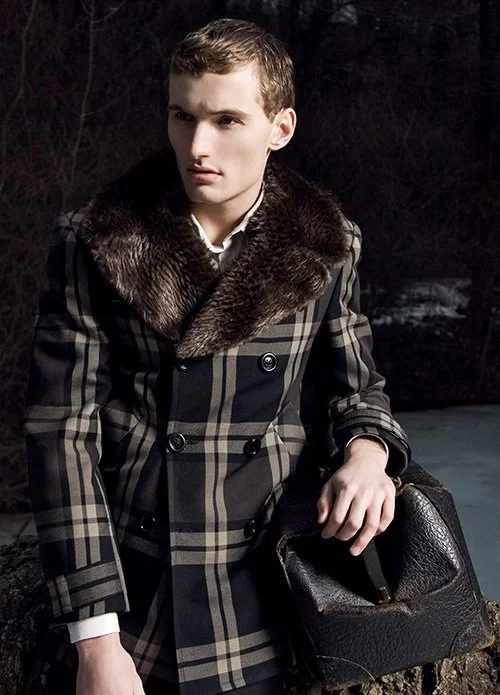
Peacoat variation made in the Philip Sparks Toronto studio

Peacoat variation made in the Philip Sparks Toronto studio

Overcoat Styles

One of the reasons we love making overcoats so much is because there are so many options. Yes, there are lots of suit styles as well, but our community seems to have a broader idea of what they like in a piece of outerwear, which means we get to have a lot of fun.

Craig, a tailor at Philip Sparks in a Blanket coat he made in our Toronto studio

Craig, a tailor at Philip Sparks in a Blanket coat he made in our Toronto studio

Blanket Coats

are as Canadian as they get. These simpler, long, wrapped coats – usually with a hood – are, you guessed it, made from blankets. We have created a fair number of them including the one pictured here that Craig made for himself from a vintage Swiss army blanket.

Bespoke town coat made in the Philip Sparks Toronto tailoring studio

Brandon in a bespoke town coat made in our Toronto studio

Town Coats

are the opposite of a blanket coat. They are made to wear over a blazer, can range in length from knee to mid-calf, and can be single or double breasted. They almost always sport a structured shoulder, a roped sleeve and can have a peaked or notched lapel.

Peter in a bespoke peacoat made in our Toronto studio

Peter in a bespoke peacoat made in our Toronto studio

A Pea Coat’s

origin is in the navy, and they are traditionally navy blue in colour. These coats are usually cut mid-thigh and double breasted with a higher break, a wider lapel, and collars that are rounded at the corner. While you can’t go wrong with a classic version, there are many possible variations of this style.

A Chesterfield made in our Toronto studio with a leather collar instead of the traditional velvet

A Chesterfield made in our Toronto studio with a leather collar instead of the traditional velvet

A Chesterfield

is tougher to define. I see them as single or double breasted and in a variety of lengths. The main feature is a top collar cut in a different cloth, usually in a black velvet but, in the case of the coat pictured here, leather works too.

Philip in a bespoke car coat made in our Toronto studio

Philip in a bespoke car coat made in our Toronto studio

A Car Coat

is my personal favorite coat style. Cut to shelter you, these long loose coats accommodate many layers and are meant to keep you warm for extended periods in the cold. You might also sometimes hear them called stadium coats, in reference to historical illustrations showing them being worn at outdoor sporting events in colder weather. They were originally made for cars that did not have enclosed cabs. They are also usually double breasted with an even wider, pea coat-style collar, usually with back belts that let you cinch in extra material when you aren’t wearing as many layers. The one pictured here is my own, made in the shop. It is my personal favorite item of clothing. It gives me something to look forward to when the temperature goes below minus-20.

Andrew in a bespoke Balmacaan coat with raglan sleeves, made in our Toronto studio

Andrew in a bespoke Balmacaan coat with raglan sleeves, made in our Toronto studio

Balmacaan Coats

are named after a place in Scotland. They are usually made of tweed cloth in slightly lighter weights than some of our heftier deep winter overcoats and are usually only partially lined. Key features of a Balmacaan are its raglan sleeve and convertible style of collar. Did you know that a raglan sleeve is named after Lord Raglan, who needed a coat sleeve that was easier to put on after losing an arm in battle. This sleeve style was developed for him to make a coat easier to put on and take off.
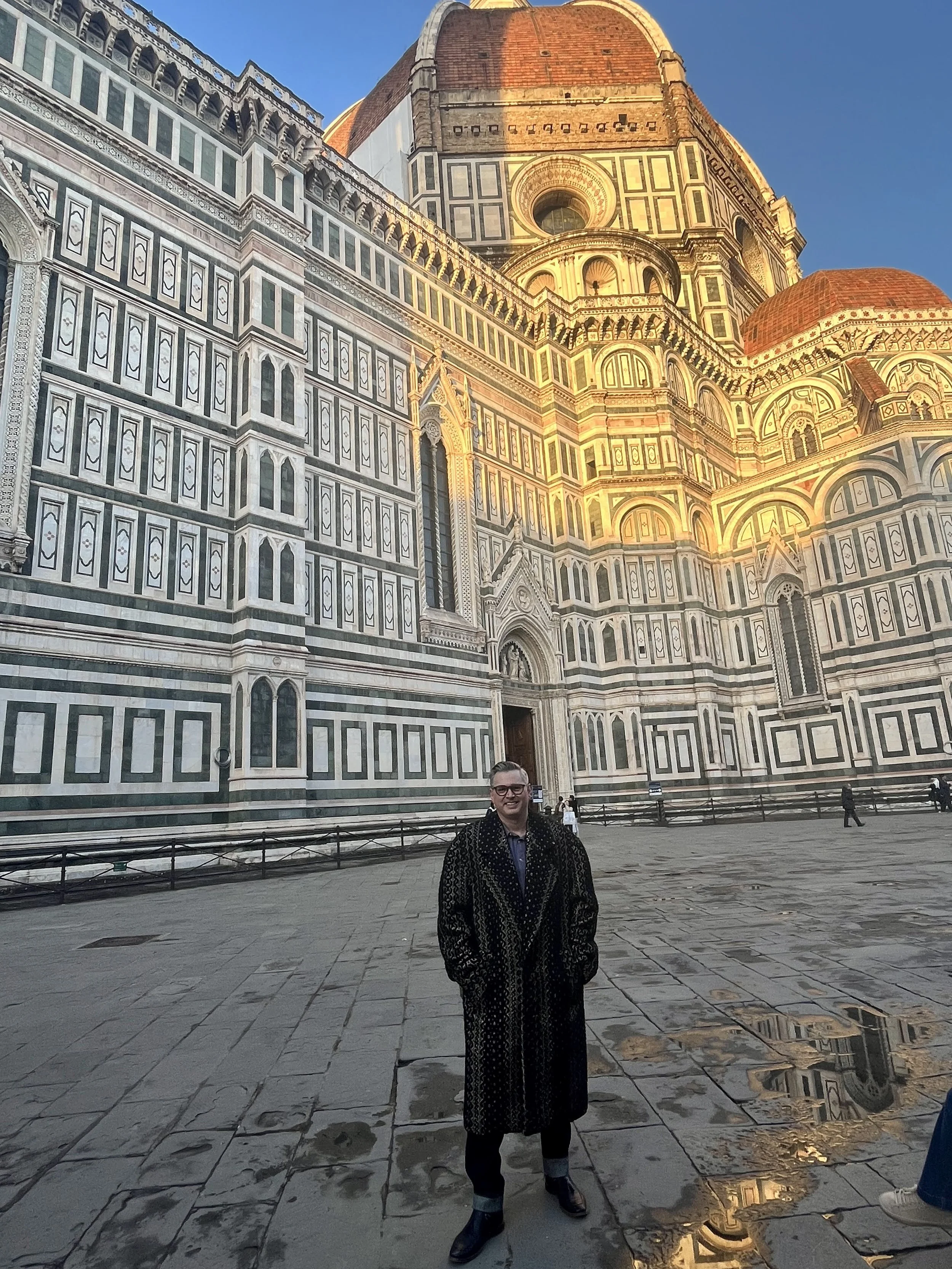
Philip in an bespoke novelty coat made in our Toronto studio

Philip in an bespoke novelty coat made in our Toronto studio

I could go on. At the talk, we also discussed duffle coats, work coats, capes, cloaks, opera coats and fashion coats, all of which are items we produce in the shop

Practical Details for a Winter Overcoat

Back belt detail on a bespoke car coat made in our Toronto studio

Back belt detail on a bespoke car coat made in our Toronto studio

There are many other practical details that we put into overcoats. Storm tabs are common elements at the cuff or collar of an overcoat, allowing you to button up at the neck or tighten things up at the sleeve to block wind. Collars that pop are something a client should request. We can shape wider under collars so that the collar still sits neat and high to the back of the neck when worn down, but when popped it fits around the back of the head and chin. Back belts are great ways to nip in the waist or to let a coat out in the waist as extra under layers are required in colder weather. Another practical detail is a button in the back vent that can be done up on a blustery day.

Bespoke Overcoat Construction

Tom a tailor at Philip Sparks, demonstrating how to baste (or hang) a canvas into a bespoke overcoat

Tom a tailor at Philip Sparks, demonstrating how to baste (or hang) a canvas into a bespoke overcoat

Tom delivered a great demonstration of how a canvas is basted into a coat front and we discussed the variety of weights of canvas that can be used to increase or decrease the weight of an overcoat. We talked about the Canadian-made, flannel-backed Kasha linings that we add to coats for extra warmth, about flannel lined pockets and suede backed liners that keep the wind off your kidneys.

Winter Overcoat Fabrics & Materials

Overcoat materials on display at the Philip Sparks Toronto tailoring studio

Overcoat materials on display at the Philip Sparks Toronto tailoring studio

We talked about the various tweeds and woolens that are appropriate for overcoats but, most importantly, we talked about wool’s ability to felt. Melton, for example, is a cloth that has been woven and then boiled (or fulled) and felted. This makes a cloth that is very dense and heavy and blocks more wind. We also explored other fibres like camel hair and cashmere that make for luxuriously soft and warm overcoats.

Fur Liners, Collars & Bespoke Overcoat Details

A detachable fur liner in a bespoke car coat made in the Philip Sparks tailoring studio

A detachable fur liner in a bespoke car coat made in the Philip Sparks tailoring studio

Craig shared a demonstration of how fur is cut with a special knife from the back side so as not to cut the hair. We also had a demonstration of how fur is pieced together and sewn to appear seamless using our vintage Bonis Never Stop fur sewing machine. We talked about how old furs can be recycled and the joys of accessories that can be added to an overcoat like detachable fur collars, mitts, gloves and removable inner fur vest.

If you want to explore your options for a bespoke overcoat or other outerwear, book a consultation with our Toronto tailoring studio. We can discuss the style, cloth, construction and details that will make the right coat for you.
Back to Workwear

Back to Workwear: Japanese Selvedge Denim, Indigo & Workwear

Back to Workwear Event

Back to Workwear event

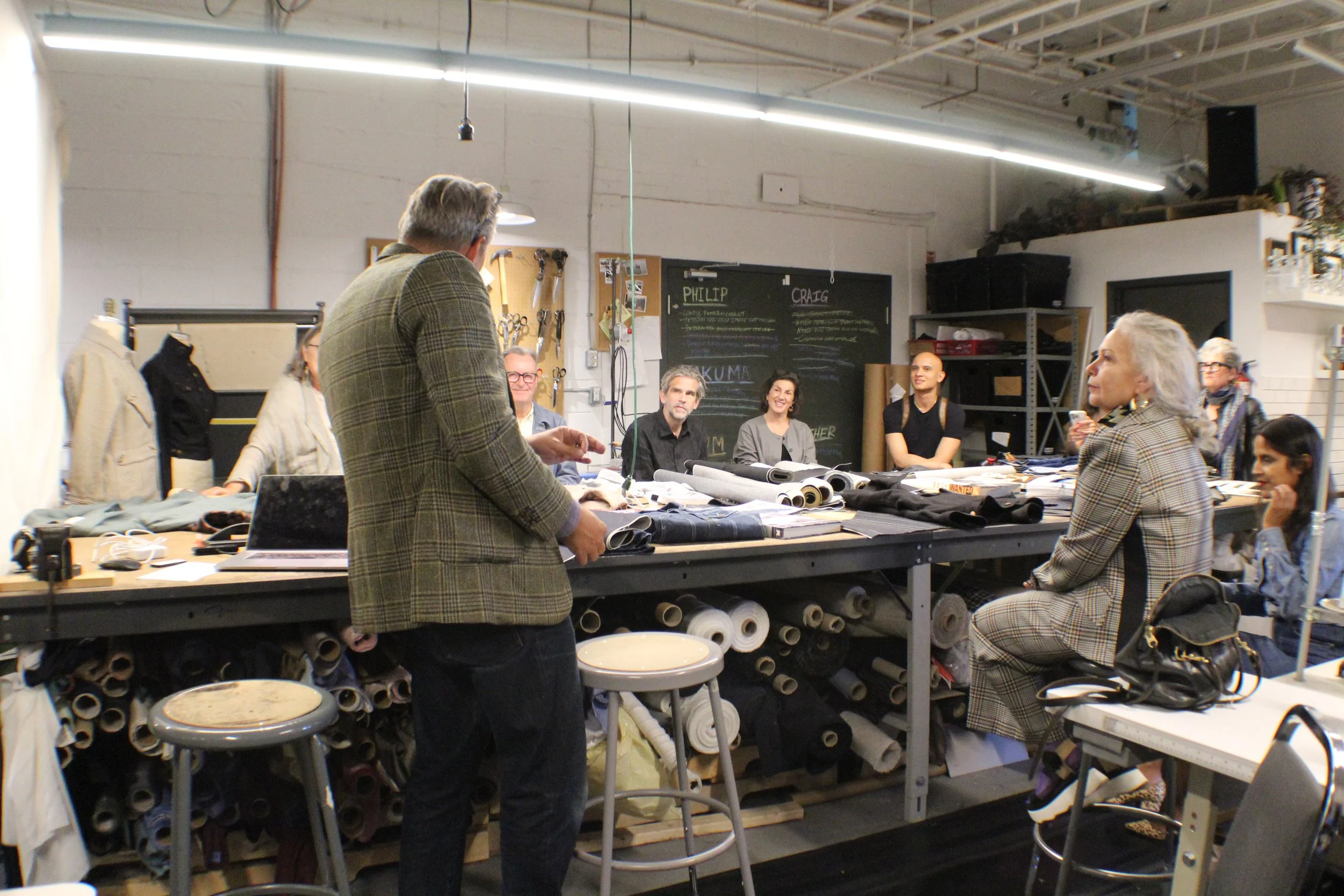
We hosted a great workshop on Sept. 19 called “Back to Workwear.” Tickets went quickly and we had a full house. I am humbled by how much interest there is in what we do, how we work and why we source specific materials. The workshop focused on Japanese selvedge denim, traditional shuttle looms, natural indigo and the specialized equipment and techniques used to make and maintain workwear.

We spoke about textiles first and, specifically, what’s so special about Japanese selvedge denim.

The History of Selvedge Denim

To kick things off, we looked at the history of this cloth. The first denim cloth was made in the French city of Nîmes and was used to make sails for boats. It was a type of cloth called serge de Nîmes (the term serge refers to the twill or diagonal pattern that can still be seen up close on most pairs of jeans but, over time, the fabric would more commonly be shortened to de Nîmes). It could be more densely woven, and its structure provided some natural give, or elasticity.

During the gold rush to the Klondike, Levi Strauss, a German-American entrepreneur, popularized using denim fabric and dyed the warp yarns with what was, at the time, cheap natural, indigo dye. This is the era when American denim as we still know it today was born. It was during the second World War that Japanese culture was introduced to American denim via U.S. troops. At the time, Toyota (or Toyoda, as it was called then) was a loom manufacturer and it made improvements to the shuttle loom that was used to produce denim. Most notably, the Toyoda machine stopped automatically when its bobbin of yarn ran out.

Japanese Selvedge Denim & Shuttle Looms

The shuttle loom is key in selvedge denim. It weaves much slower with yarn under much less tension than rapier looms, which are used in a lot of denim production today. I have posted a video below that shows the looms in operation at Kuroki, a denim mill in Japan’s Okayama prefecture, which I visited this past spring. In it, you can see a shuttle with a bobbin of yarn on it travelling back and forth. Its lower tension gives the fabric more elasticity across the body without the need to introduce synthetic Spandex, which stretches out over time and does not return to its original shape. This means a pair of jeans made from selvedge denim will shape and mould to your body and come back to its original shape when washed. The other benefit is a beautiful, finished edge of the fabric, which is usually in a different colour and can be used as the finish on inside seams and in some subtle details in the garment. Incorporating a discrete selvedge detail on a piece is appreciated by others who share a love for this historic cloth.

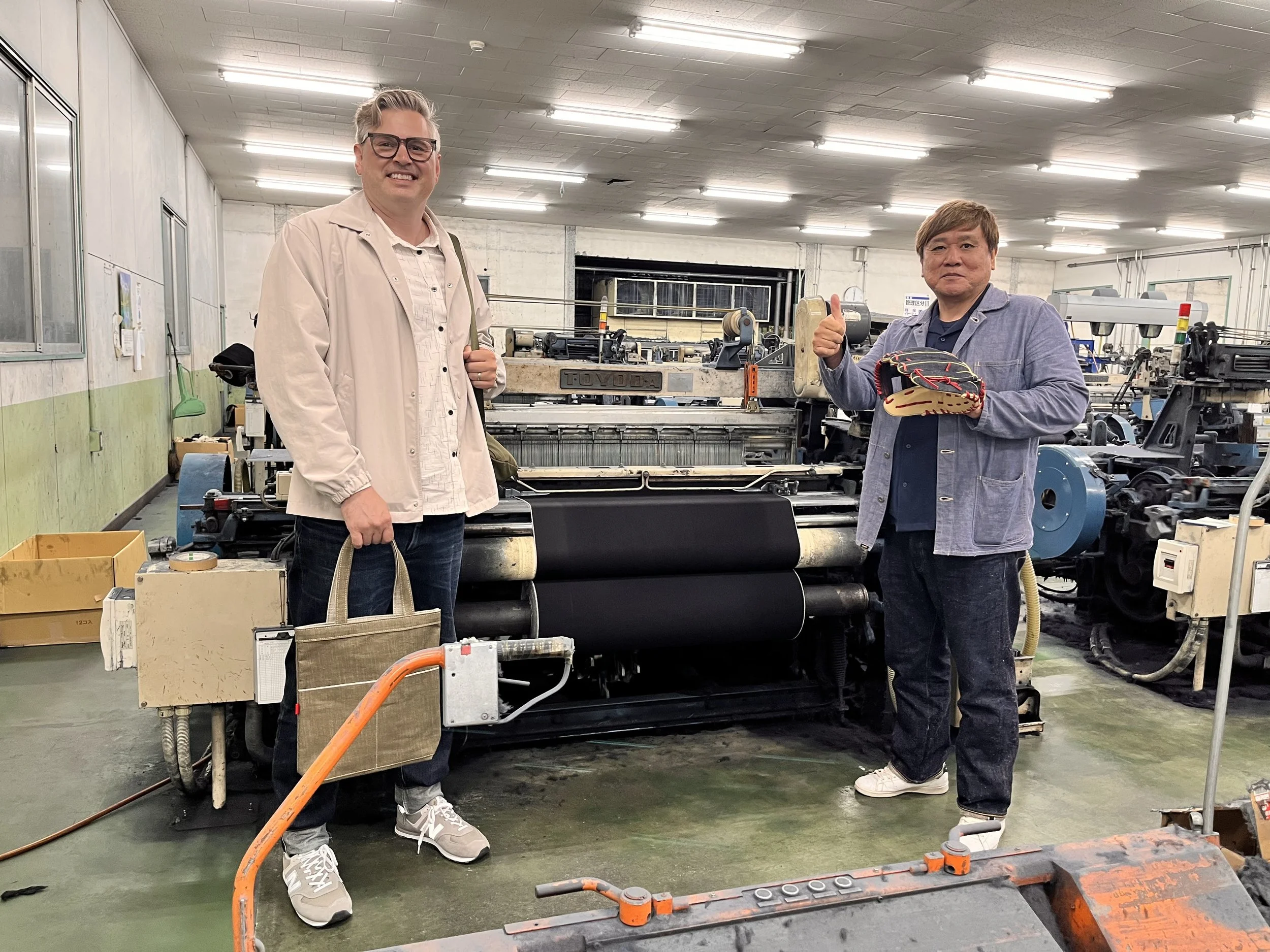
Toyoda shuttle loom at Kuroki denim mill in Okayama, Japan

The contemporary rapier loom creates wider fabric under higher tension by passing the yarn back and forth off a spool using a sort of clamp. The yarns are cut each time they are passed through, producing a rough edge with loose threads, and the fabric does not have the same natural give around the body. Most contemporary denim is made this way. My video of a rapier loom in action is below so you can compare.

A contemporary rapier loom in action.

Today, Toyota no longer makes its special Toyoda looms and all the newest machines still in operation are from the late 1940s and 1950s. If a part breaks, a new part needs to be made from scratch. The care and skill that keeps them operating is another detail valued by fans of selvedge denim. Despite all of these challenges, many mills in Japan are committed to continuing to produce denim in this way. In Ibara, there are still approximately 25 mills producing selvage denim for a domestic culture that’s still obsessed with vintage Americana.

Natural Indigo & Japanese Denim

A rare loom weaving a durable type of cloth that has clean, finished edges and natural elasticity is only half of selvedge denim’s appeal. We can’t talk about workwear without also talking about natural indigo.

Indigo

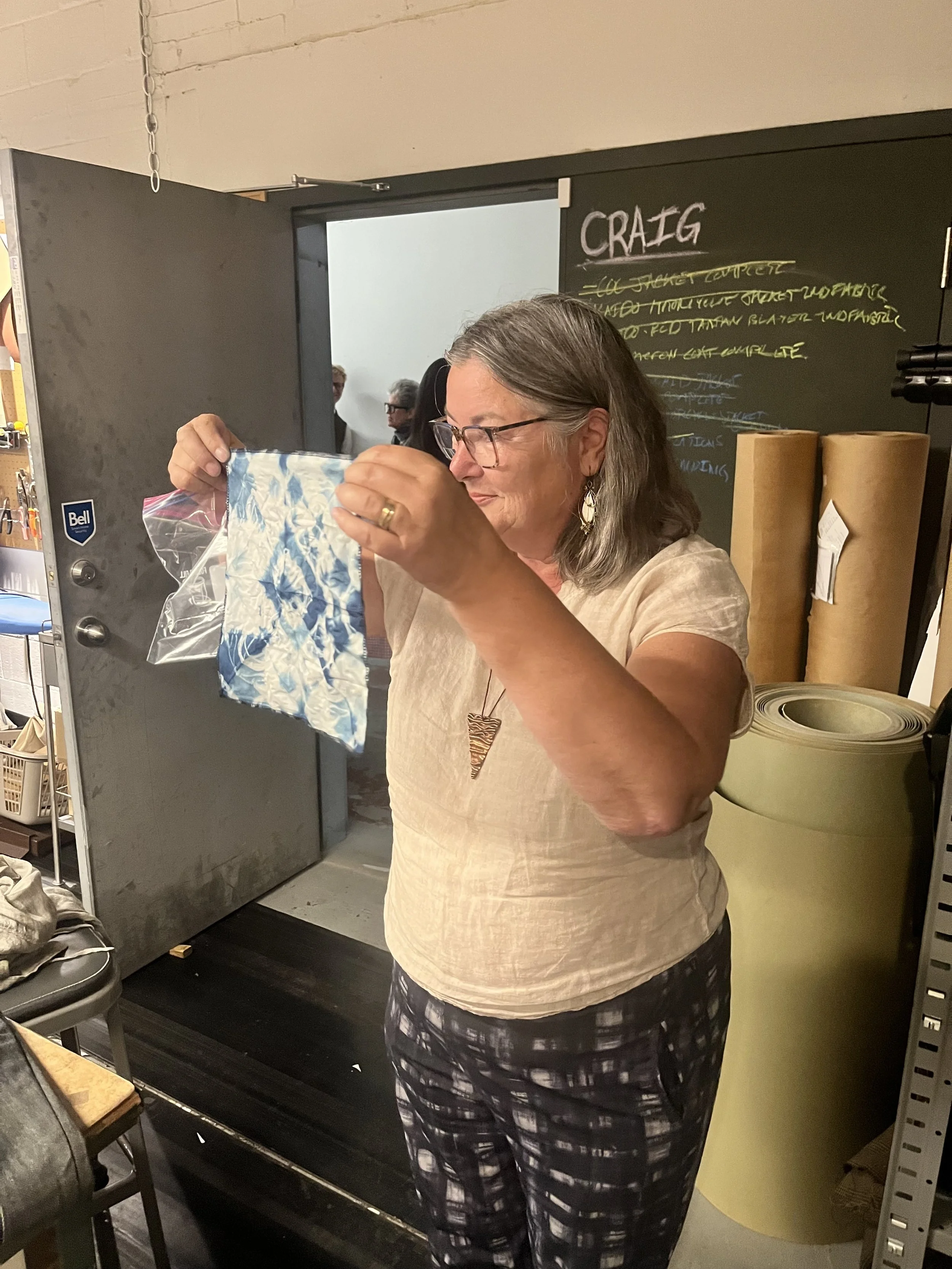
Gitte showing off the pocket square she dyed in indigo during our workshop.

Indigo comes from many types of plants. It is usually extracted from plant leaves by a process of fermentation, where bacteria eat all the plant matter except the indigo. There are many different processes for extracting indigo that have been developed all over the world. And while it was viewed as a cheap dye in the past, indigo production is labour intensive and is by no means affordable by today’s standards.

I have worked with indigo at an artisanal level for over a decade. It works much differently than other dyes. To get a deep blue, I dip into a stew of powdered indigo extract, fructose derived from boiled dates, calcium powder, henna and water and then expose it to oxygen multiple times. Indigo is not soluble in oxygen, which is present in regular water. When Indigo is dissolved in water, it’s actually a yellowy-green copper colour with a blue skin on the surface where it comes in contact with the air. It’s not until you expose a fabric dipped in indigo to oxygen that it starts to turn blue. Our workshop guests had the opportunity to try dipping their own pocket squares into an indigo vat I built and witness this process firsthand.

I was very curious to understand how this multi-step dipping and oxidation process worked at an industrial scale. You can see it in the video below where, at Kuroki, I was invited into the dye house to see their process of rope dying. Here, they are dying the warp yarns that will make up the length of the cloth by drawing them through a first vat of indigo and then raising those yarns 10 metres into the air. The yarns travel up and down this 10-metre span 10 times and then enter a second vat of indigo and continue the same “skying” process. The yarns can be dipped in one continuous process this way through up to 10 indigo vats.

Indigo” rope dying” at Kuroki

According to my host at Kuroki, Mr. Ii, most North Americans prefer a lighter indigo for a more blue jean that is dipped four times and most Japanese and Europeans prefer something darker that is dipped seven times. Dipping 10 times will produce an almost black-blue. Below is a video of yarns dipped four times and yarns dipped seven times to see the difference.

Comparing four indigo dips with seven indigo dips.

Why does natural indigo matter? First, it’s a plant and using it as a dye is not harmful to the environment. The water used in the process can also be recycled as long as the concentration of indigo is monitored and increased as needed.

From the perspective of wearing jeans, what’s special about the stain is that it fades. If you cut a yarn dyed with indigo, the inside of it will still be white. In combination with a natural cream cotton yarn that is woven as the width of the fabric, this causes the denim to streak and fade where you rub on it, fold it and wear it. The cloth becomes more mottled as it patinas and wears. This effect is so desirable that many jean brands achieve it using chemicals, enzymes and sanding so your new jeans look well-worn before even putting them on. We prefer the authenticity of a wearer putting their own unique mark on the piece we make for them.

Denim Construction & Specialized Sewing Machines

Where do we as makers of garments come in?  Many of the details seen on workwear are related to the industrial sewing equipment that was developed to make it more affordable. Just like the Toyoda looms, a lot of that equipment is no longer produced and contemporary versions can often only handle lighter weight materials and more flimsy thread.

A regular sewing machine creates what’s called a lockstitch that does not have much flexibility under tension. A chain stitch, which is preferred when sewing denim, is created with a series of loops that have a natural give and allow the denim to mould and shape to your body. Below is a video showing the difference in these two types of stitches.

chainstitch vs lockstitch

At the shop, we have a Union Special felling machine that Tom demonstrated for our guests. This model folds over the cloth and produces the clean finished seams you often see on the back of a pair of jeans. It sews two or three rows of stitching.  It is not easy to use and requires a lot of training as well as adjustments for any change to the type of cloth running through it. It is more aggressive with pullers and folders than can manage the heavier weights of denim we normally work with. This is just one example of the specialized denim equipment we use in our Toronto workroom. We use at least 10 different specialized machines to craft one pair of jeans. If you'd like to learn more about our custom jeans and workwear, visit our Custom Jeans & Workwear in Toronto page.

Union Special felling machine used to construct custom jeans at the Philip Sparks Toronto workroom

Tom demonstrating our Union Special felling machine

The Life of a Pair of Selvedge Jeans

As durable as that pair will be, selvage denim does still wear out. When a piece of well-loved workwear that we’ve created returns to the shop to be mended, new stitches or patches add more character to the piece. Over years and, hopefully decades, the story of your denim slowly builds to become a piece that is entirely, uniquely your own. These are some of the materials, machines and techniques that we bring into our own workroom when we make custom jeans and workwear in Toronto.

Well-worn pair of custom jeans made and mended at the Philip Sparks Toronto workroom

Well-worn pair of custom jeans made and mended at the Philip Sparks Toronto workroom

Thank you to everyone who came out to the event. Thank you to Takuma Kobayashi for the translation of emails and phone calls. Thank you to Seiko Kudo for showing up last minute to translate in person. A very special thank you to Mr. Naruhiko Ii for sharing your passion for the production of selvedge denim with me, touring me through Kuroki’s facilities, taking me out for an incredible Japanese lunch and for driving an hour to take me back to the train. Thank you to the President of Kuroki Mr. Tatsushi Kuroki for opening up your factories to me.

Shuttle loom

Philip with Mr. Ii on the Kuroki weaving floor

Interested in having your own pair of custom jeans made?

Explore our Custom Jeans & Workwear in Toronto.