October Is Wool Month: Celebrating the Fibre We Love to Tailor

Stone engraving of sheep found in Florence representing the Arte della Lana (the Guild of Wool Merchants)
October is Wool Month, and we're celebrating!
Well over 85% of the garments we produce in-house are made with wool fabrics. We have an incredible selection in our Ruby Room Fabric Library, with extensive swatch books of wool cloths from Italy and the UK. We can even source wool cloth made locally in Ontario, with wool sourced and processed locally in Ontario through producers and mills such as Wave Fibre Mill and Upper Canada Weaving
So, what is it about wool that makes us love working with it so much?

Bolts of Wool Cloth in the Philip Sparks Ruby Room Fabric Library
Is Wool Itchy?
The truth is, wool isn't always itchy. You've likely worn wool garments without even realizing they were made from wool.
To understand why some wool feels scratchy, it helps to look closely at the fibre itself. Wool fibres are covered in tiny overlapping scales, a bit like roof shingles. The shape and arrangement of these scales influence how the fibre's surface behaves and how it interacts with the skin.
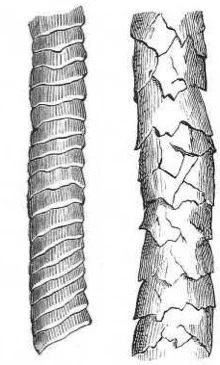
Fine and Course Wool Scales
Fibre diameter is part of the story, but it isn't the whole story. The flexibility of the fibre, the type of wool, and how the yarn is spun and the cloth is woven or finished all contribute to how a fabric feels against your skin.
We've worked with Canadian and Ontario wool that is classified as coarse but can still feel surprisingly soft and comfortable to wear. That's one of the things we find so interesting about working with local wool: you can't judge a cloth by a single characteristic on a specification sheet. You have to handle it, understand it and see what it can do.
What's So Special About Wool?
Wool has a remarkable combination of natural properties. Despite decades of textile innovation, it's difficult to replicate all of these characteristics in a single manufactured fibre.
Wool Has Crimp
The natural crimp of wool fibre is one of the reasons we love it so much as tailors. Crimp gives wool its natural elasticity, allowing the fibres to stretch and recover without needing synthetic fibres such as elastane or spandex.
Combined with wool's ability to be shaped and set with steam, this makes it an incredible material to work with. Think of it a little like curling or straightening your hair: with the right combination of heat, moisture and technique, we can use our irons to mould wool cloth and shape it to the finer contours of your body.
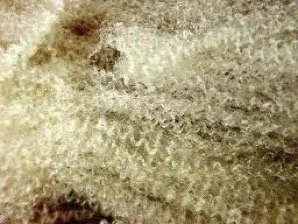
Wool Crimp
Wool Can Be Surprisingly Lightweight
Some wool fibres have a hollow central core called a medulla. Combined with wool's natural crimp and the air trapped within the fabric, the structure of the fibre helps explain how wool can provide warmth without necessarily being heavy.
This lets us make substantial fabrics for things like overcoats without the finished garment becoming unnecessarily heavy.
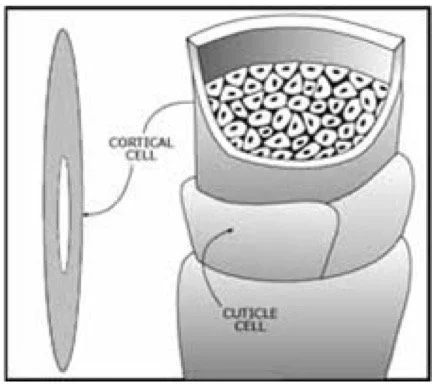
Hollow Core of Some Wool Fibres Called Medulla
Wool Felts
Wool felts, which means you need to take a little extra care when looking after it.
Heat, moisture, soap and friction can be a recipe for felt. Most of us have experienced this by putting a wool sweater through the washing machine. It's not simply that the garment shrinks; the fibres become entangled as their overlapping scales catch against one another, causing the fabric to become denser and harder.
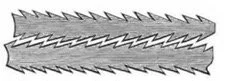
Interlocking Scales on Wool Fibre
Textile manufacturers take advantage of this unique property. Some flannel suitings and overcoat fabrics are woven and then fulled, a controlled process that slightly felts and compacts the cloth before it is cut and sewn into a garment. This helps produce a denser fabric with a particular feel, finish and performance.
So, while felting can be disastrous in the washing machine, it can also be a very useful tool in the hands of a textile manufacturer.
Wool Is Naturally Flame Resistant
Wool will burn under the right conditions, but it is naturally more resistant to ignition than many common textile fibres. It tends to smoulder rather than sustain a vigorous flame, and it will often self-extinguish when the flame source is removed.
It's another remarkable property of this natural fibre, although wool garments should never be considered fireproof.
Wool Is Hot? Not Necessarily!
Wool has excellent insulating properties, but that doesn't mean it's only suitable for winter.
The same properties that help wool retain warmth can also help regulate temperature in warmer conditions. Its natural crimp traps air, while the fibre can absorb moisture vapour and release it again, helping manage the microclimate next to your skin.
Advances in spinning and weaving have also made it possible to produce exceptionally lightweight wool fabrics suitable for summer clothing. Fine tropical wool suiting, for example, can be a wonderful choice for warm weather.
Wool can absorb a substantial amount of moisture vapour without immediately feeling wet against the skin. This helps explain why it can be comfortable to wear across a range of temperatures and conditions.
For us, that versatility makes wool an excellent choice for everything from lightweight summer suits to substantial winter overcoats.
We Love Wool, and We Love the People Who Make It Possible

Brown and Black Sheep at Wave Fibre Mill in Parry Sound Ontario
There are so many other things we love about wool as a natural, renewable fibre. But we also love sheep and the farmers who take pride in raising and caring for them, along with the spinners, weavers and craftspeople who turn their work into beautiful cloth.
This October, we're celebrating Wool Month with the 200km jackets, made in collaboration with Gerhard Supply and Wave Fibre Mill. The project brings local materials and craftsmanship into focus as we begin celebrating our 20th year in business.
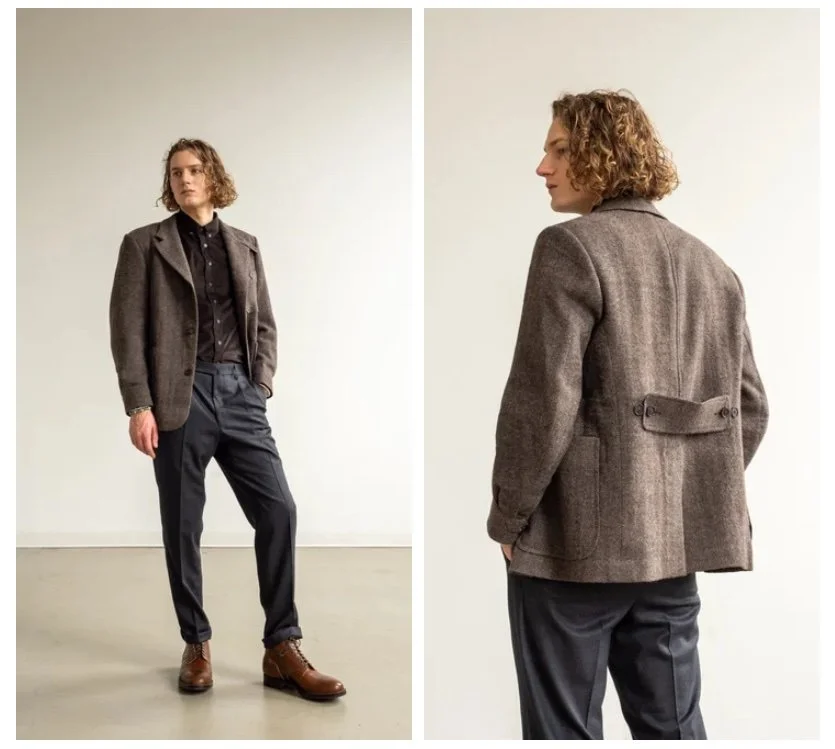
200Km Jackets
It's a chance to recognize the people and processes behind the cloth, and to celebrate what can happen when we bring local producers, makers and designers together.
