November Mood Board: The Bespoke Overcoat

November Mood Board: The Bespoke Overcoat

Philip was tasked with putting together our November Mood Board for 2026, and with colder weather approaching, it's no surprise that overcoats are on his mind.

This particular mood board was developed around a coat commission we've had the pleasure of bringing to life in the shop. It offers some great inspiration for anyone considering a bespoke overcoat of their own.
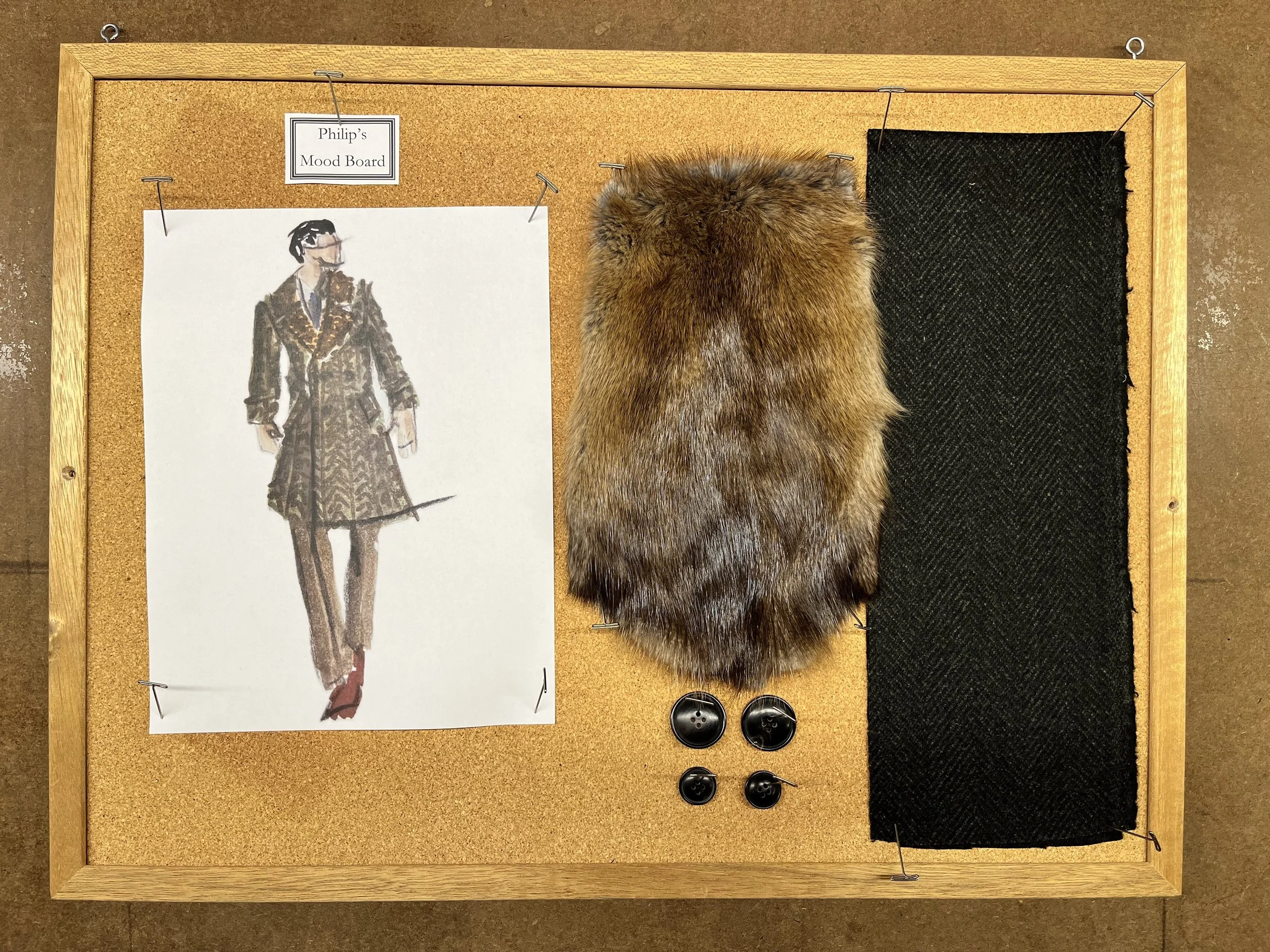
Philip’s November Mood Board: The Bespoke Overcoat

Philip’s November Mood Board: The Bespoke Overcoat

The design draws inspiration from early to mid-century overcoats, with a slightly shorter length for a more contemporary feel. It's a formally cut, double-breasted piece featuring a strong shoulder, a nipped-in waist and a back belt that can be adjusted to accommodate different layers and the additional bulk worn underneath. Storm tabs at the sleeve cuffs allow the openings to be tightened, helping prevent cold winds from travelling up the sleeves on even the blusteriest of days.
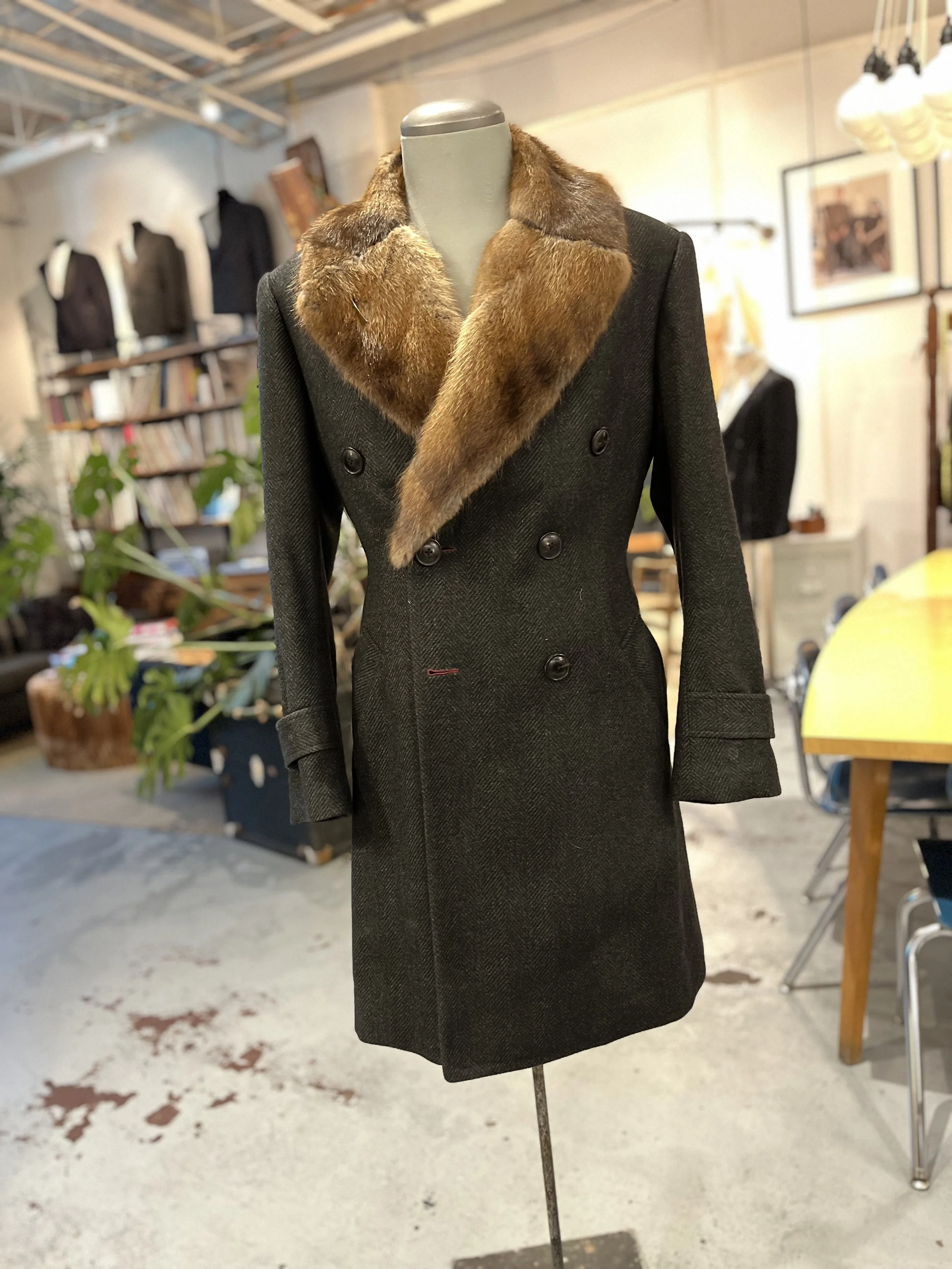
Bespoke Overcoat with Fur Collar Made in the Philip Sparks Tailoring Studio

Bespoke Overcoat with Fur Collar Made in the Philip Sparks Tailoring Studio

The coat features angled welt pockets with flannel linings, providing a warm and easily accessible place for your hands, even when wearing gloves. A wide, deep centre-back vent allows for ease of movement, while the peaked collar features softly curved corners and crisp, wide topstitching.
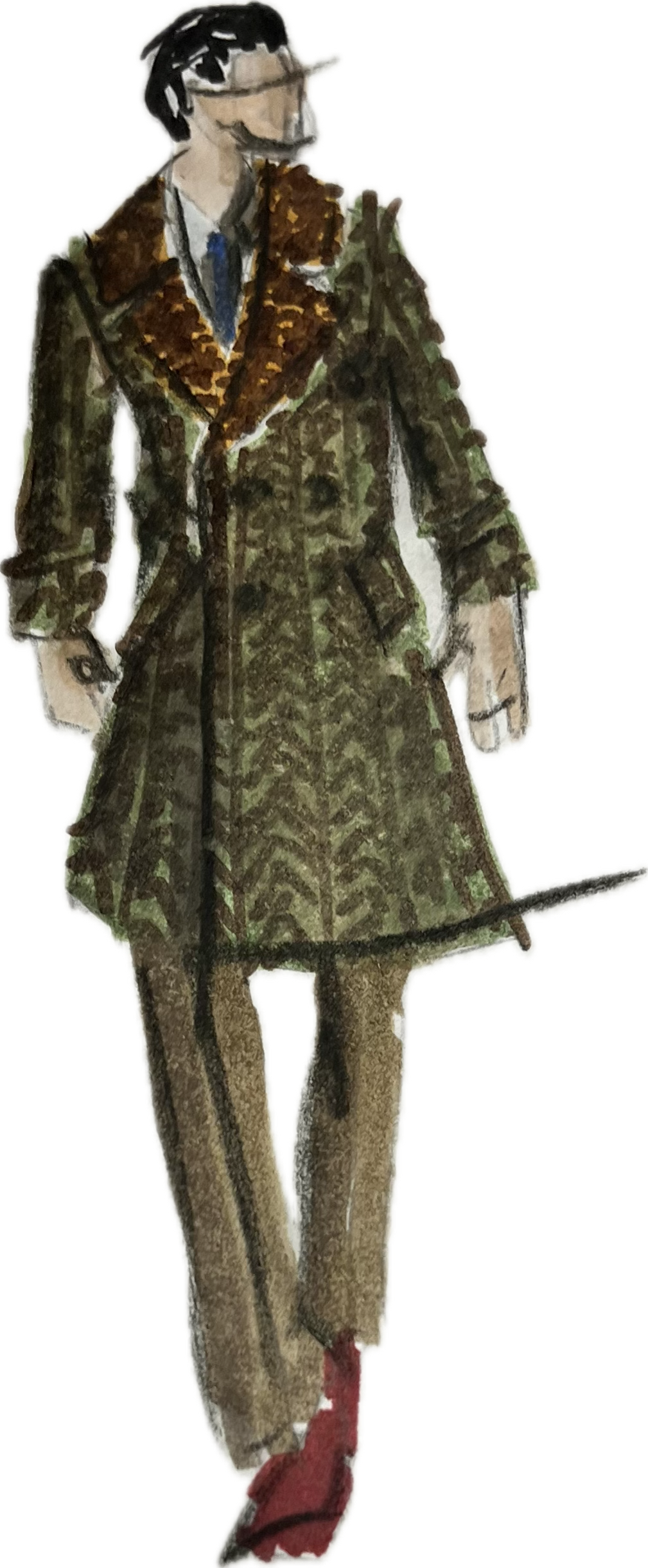
Philip Sparks Bespoke Overcoat Concept Illustration

Philip Sparks Bespoke Overcoat Concept Illustration

At the commissioner's request, this coat was designed to be on the lighter side, so we opted for a lightweight canvas in its construction and cut the coat in a luxurious green herringbone overcoating by Loro Piana, woven in Italy.
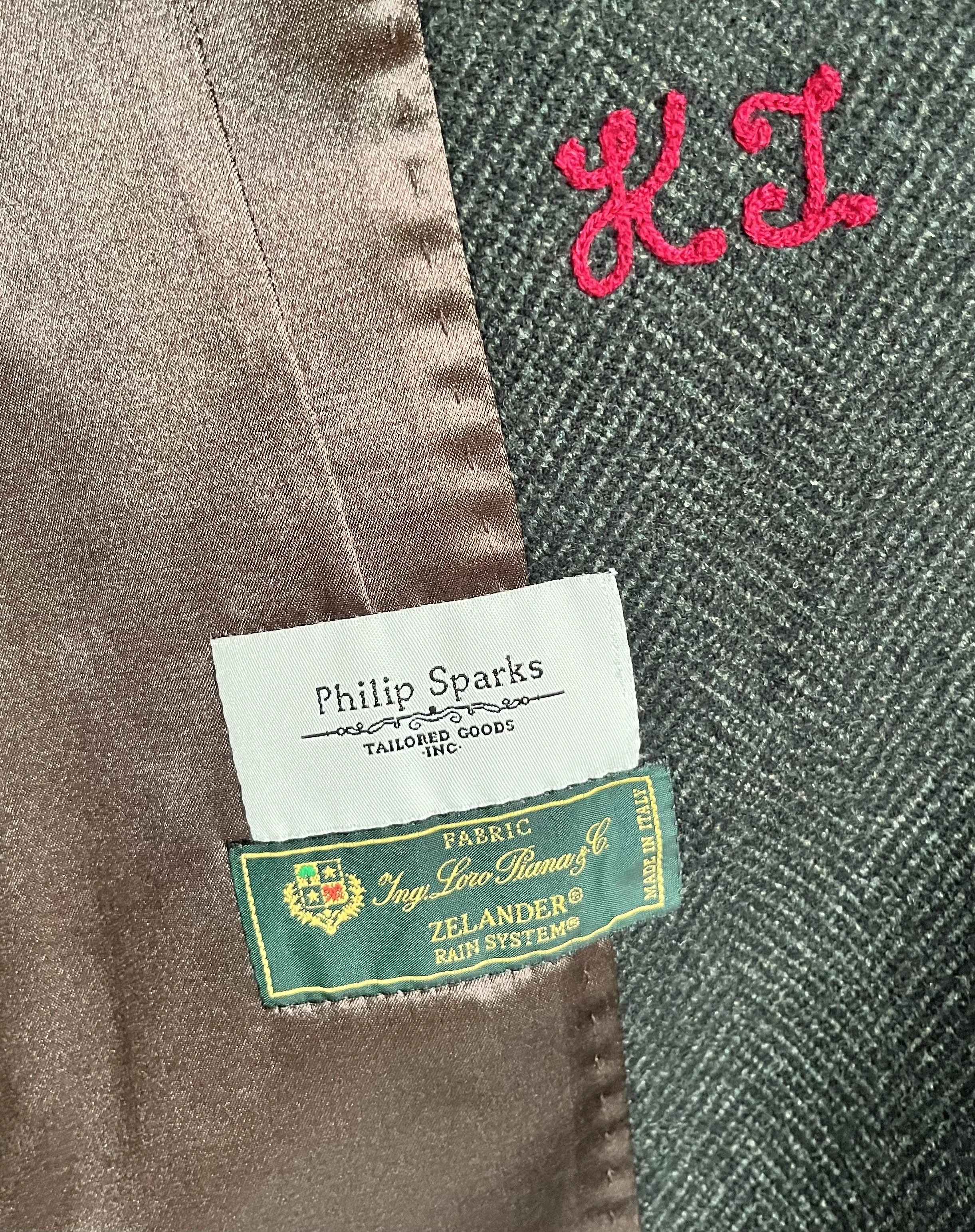
Embroidery and Labels Inside a Bespoke Overcoat made in the Philip Sparks Tailoring Studio

Embroidery and Labels Inside a Bespoke Overcoat made in the Philip Sparks Tailoring Studio

Perhaps the most distinctive detail is the muskrat fur collar. The collar has been designed to be worn popped up, providing additional protection around the neck in cold and windy conditions. We make all of our fur collars detachable, allowing the coat to be worn with or without them. This also makes garment care and cleaning considerably easier.
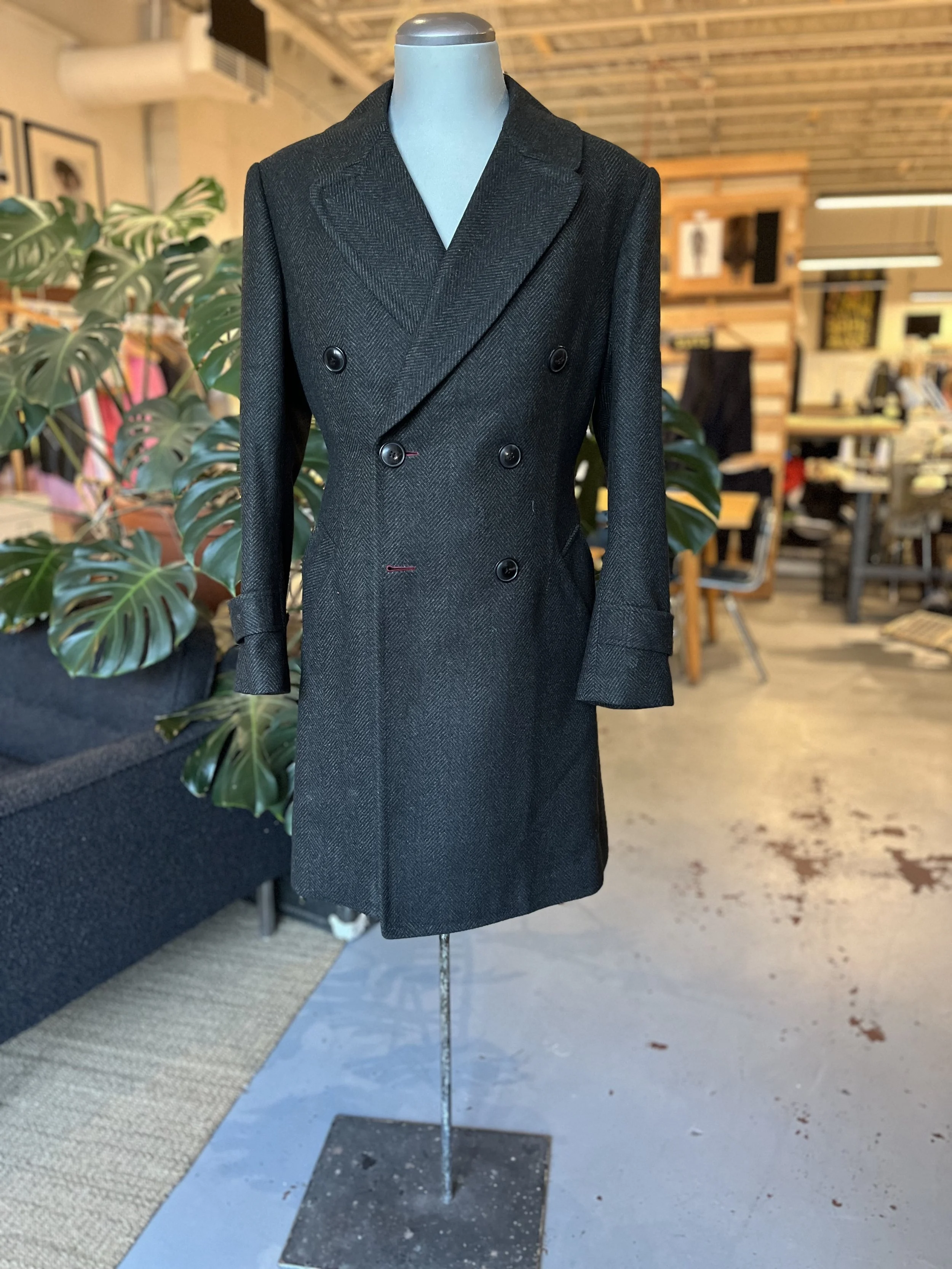
Bespoke Overcoat Made in the Philip Sparks Tailoring Studio with the Fur Collar Detached.

Bespoke Overcoat Made in the Philip Sparks Tailoring Studio with the Fur Collar Detached.

Thinking about a bespoke overcoat? Book a consultation with one of our tailors and let's start designing.

October Is Wool Month: Celebrating the Fibre We Love to Tailor

October Is Wool Month: Celebrating the Fibre We Love to Tailor

Stone engraving of sheep found in Florence representing the Arte della Lana (the Guild of Wool Merchants)

Stone engraving of sheep found in Florence representing the Arte della Lana (the Guild of Wool Merchants)

October is Wool Month, and we're celebrating!

Well over 85% of the garments we produce in-house are made with wool fabrics. We have an incredible selection in our Ruby Room Fabric Library, with extensive swatch books of wool cloths from Italy and the UK. We can even source wool cloth made locally in Ontario, with wool sourced and processed locally in Ontario through producers and mills such as Wave Fibre Mill and Upper Canada Weaving

So, what is it about wool that makes us love working with it so much?

Bolts of Wool Cloth in the Philip Sparks Ruby Room Fabric Library

Bolts of Wool Cloth in the Philip Sparks Ruby Room Fabric Library

Is Wool Itchy?

The truth is, wool isn't always itchy. You've likely worn wool garments without even realizing they were made from wool.

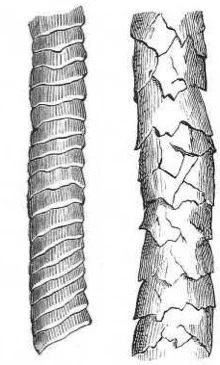
To understand why some wool feels scratchy, it helps to look closely at the fibre itself. Wool fibres are covered in tiny overlapping scales, a bit like roof shingles. The shape and arrangement of these scales influence how the fibre's surface behaves and how it interacts with the skin.

Fine and Coarse Wool Scales

Fine and Course Wool Scales

Fibre diameter is part of the story, but it isn't the whole story. The flexibility of the fibre, the type of wool, and how the yarn is spun and the cloth is woven or finished all contribute to how a fabric feels against your skin.

We've worked with Canadian and Ontario wool that is classified as coarse but can still feel surprisingly soft and comfortable to wear. That's one of the things we find so interesting about working with local wool: you can't judge a cloth by a single characteristic on a specification sheet. You have to handle it, understand it and see what it can do.

What's So Special About Wool?

Wool has a remarkable combination of natural properties. Despite decades of textile innovation, it's difficult to replicate all of these characteristics in a single manufactured fibre.


Wool Has Crimp

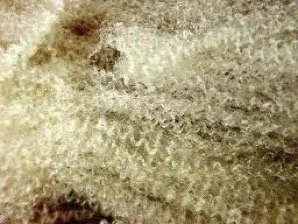
The natural crimp of wool fibre is one of the reasons we love it so much as tailors. Crimp gives wool its natural elasticity, allowing the fibres to stretch and recover without needing synthetic fibres such as elastane or spandex.

Combined with wool's ability to be shaped and set with steam, this makes it an incredible material to work with. Think of it a little like curling or straightening your hair: with the right combination of heat, moisture and technique, we can use our irons to mould wool cloth and shape it to the finer contours of your body.

Wool Crimp

Wool Crimp

Wool Can Be Surprisingly Lightweight

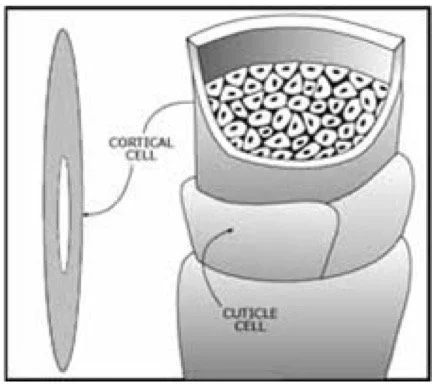
Some wool fibres have a hollow central core called a medulla. Combined with wool's natural crimp and the air trapped within the fabric, the structure of the fibre helps explain how wool can provide warmth without necessarily being heavy.

This lets us make substantial fabrics for things like overcoats without the finished garment becoming unnecessarily heavy.

Hollow Core of Some Wool Fibres Called Medulla

Hollow Core of Some Wool Fibres Called Medulla

Wool Felts

Wool felts, which means you need to take a little extra care when looking after it.

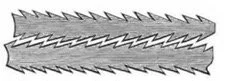
Heat, moisture, soap and friction can be a recipe for felt. Most of us have experienced this by putting a wool sweater through the washing machine. It's not simply that the garment shrinks; the fibres become entangled as their overlapping scales catch against one another, causing the fabric to become denser and harder.

Interlocking Scales on Wool Fibre

Interlocking Scales on Wool Fibre

Textile manufacturers take advantage of this unique property. Some flannel suitings and overcoat fabrics are woven and then fulled, a controlled process that slightly felts and compacts the cloth before it is cut and sewn into a garment. This helps produce a denser fabric with a particular feel, finish and performance.


So, while felting can be disastrous in the washing machine, it can also be a very useful tool in the hands of a textile manufacturer.

Wool Is Naturally Flame Resistant

Wool will burn under the right conditions, but it is naturally more resistant to ignition than many common textile fibres. It tends to smoulder rather than sustain a vigorous flame, and it will often self-extinguish when the flame source is removed.

It's another remarkable property of this natural fibre, although wool garments should never be considered fireproof.

Wool Is Hot? Not Necessarily!

Wool has excellent insulating properties, but that doesn't mean it's only suitable for winter.

The same properties that help wool retain warmth can also help regulate temperature in warmer conditions. Its natural crimp traps air, while the fibre can absorb moisture vapour and release it again, helping manage the microclimate next to your skin.

Advances in spinning and weaving have also made it possible to produce exceptionally lightweight wool fabrics suitable for summer clothing. Fine tropical wool suiting, for example, can be a wonderful choice for warm weather.

Wool can absorb a substantial amount of moisture vapour without immediately feeling wet against the skin. This helps explain why it can be comfortable to wear across a range of temperatures and conditions.

For us, that versatility makes wool an excellent choice for everything from lightweight summer suits to substantial winter overcoats.

We Love Wool, and We Love the People Who Make It Possible

Brown and Black Sheep at Wave Fibre Mill in Parry Sound Ontario

Brown and Black Sheep at Wave Fibre Mill in Parry Sound Ontario

There are so many other things we love about wool as a natural, renewable fibre. But we also love sheep and the farmers who take pride in raising and caring for them, along with the spinners, weavers and craftspeople who turn their work into beautiful cloth.

This October, we're celebrating Wool Month with the 200km jackets, made in collaboration with Gerhard Supply and Wave Fibre Mill. The project brings local materials and craftsmanship into focus as we begin celebrating our 20th year in business.

200km Jackets

200Km Jackets

It's a chance to recognize the people and processes behind the cloth, and to celebrate what can happen when we bring local producers, makers and designers together.

October is Wool Month

October is wool month, which makes it the perfect time to revisit a question I get asked a lot. What makes a tweed so special?

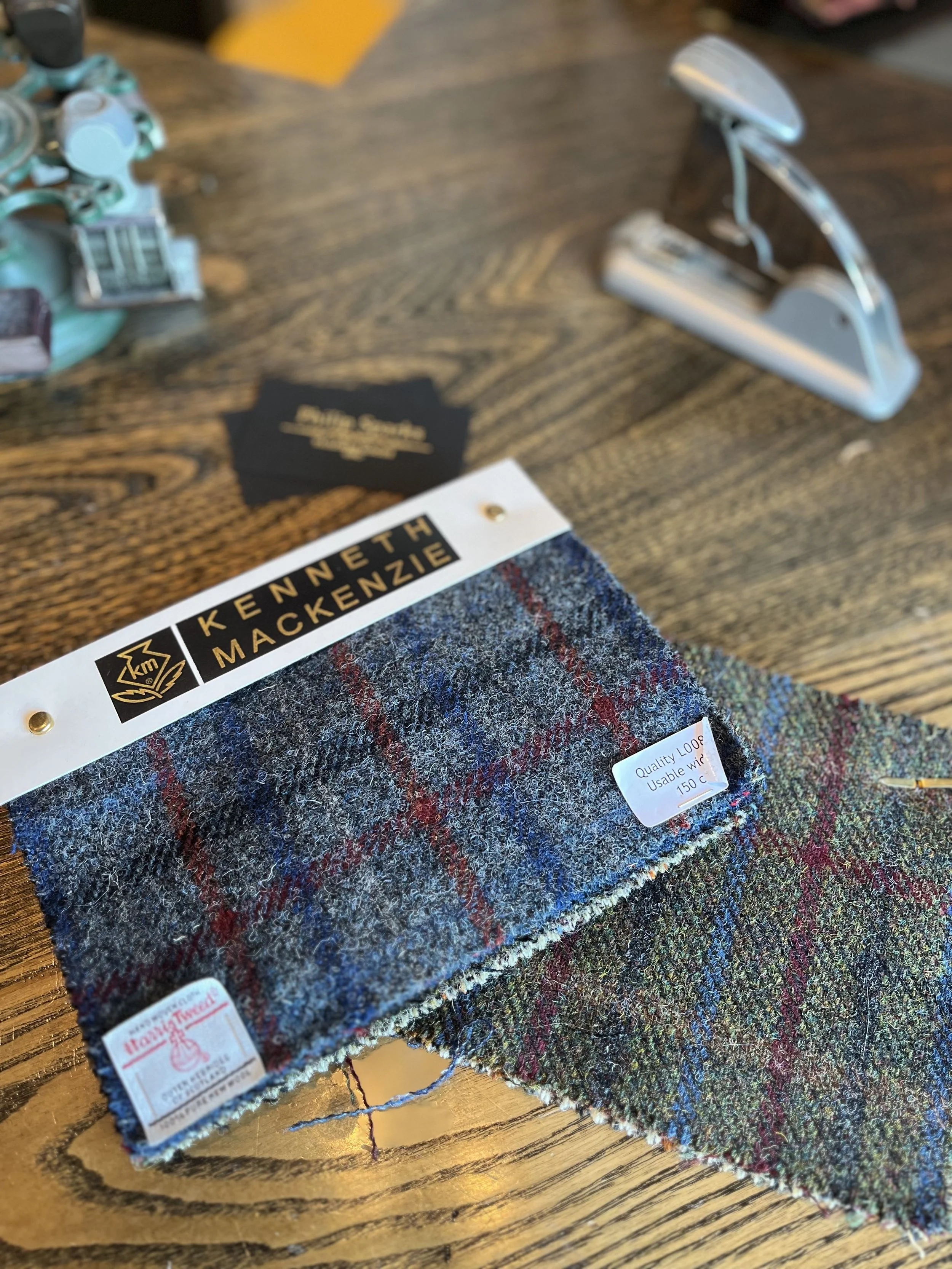
Harris Tweed Samples

The answer starts with understanding how your clothes become a specific colour. Fabrics are often dyed their finished colour after they’ve been woven, but colour can also be added at other stages in the production process.

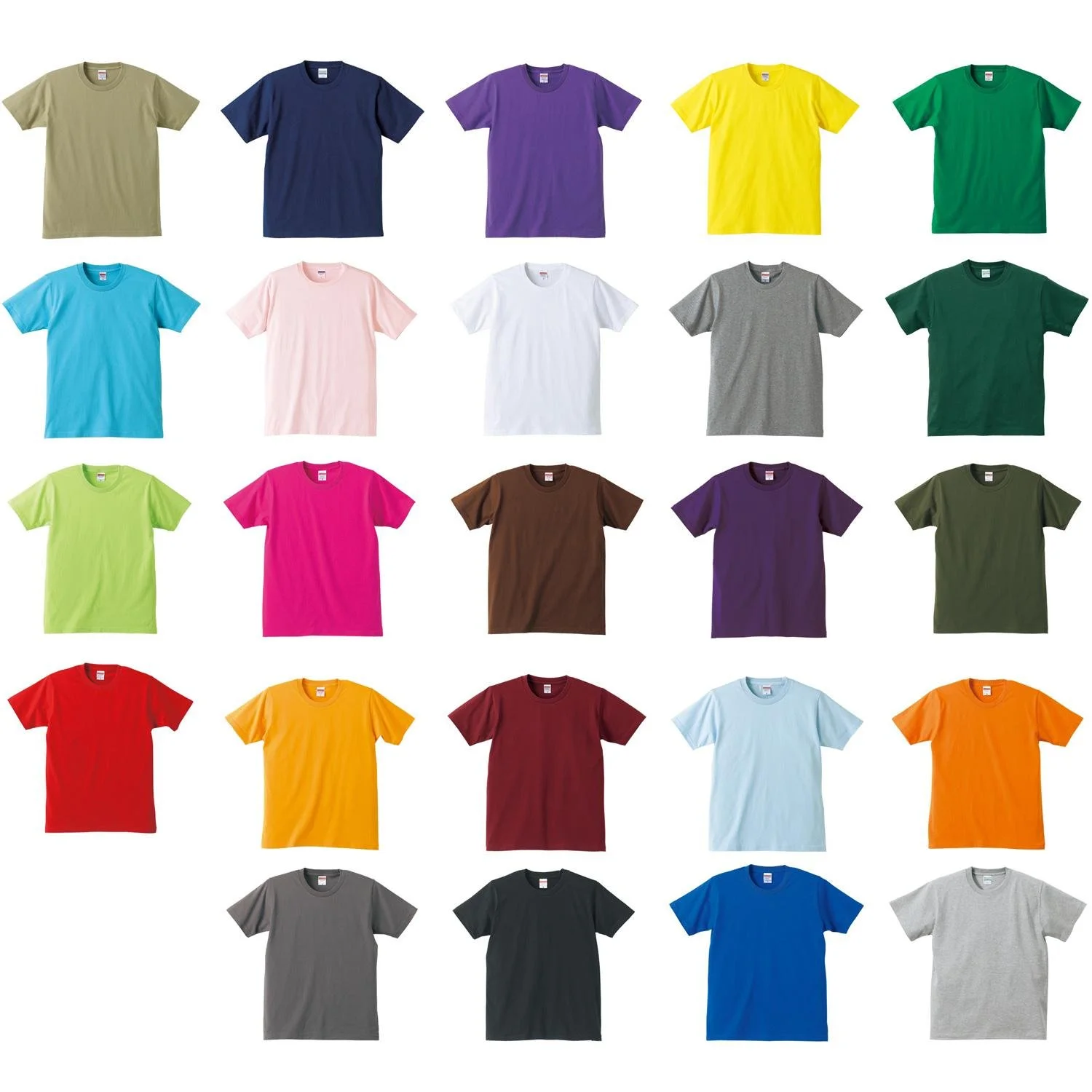
Garment Dyed T-Shirts

A “garment dyed” piece refers to when many garments are made in a griege or undyed cloth and then these finished garments are dyed a variety of different hues. This approach means that, at the end of the season, any unsold merchandise in a trendy colour can be dyed black for the next season (which is why blacks can be so tricky to keep black, especially at the fast fashion level).

Piece Dyed Textiles

Piece dyed is similar but, in its case, large amounts of undyed cloth are dyed solid colours, which can lead to a lack of depth and detail.

In yarn dyed textiles, the yarns are dyed different colours before they are woven. This is usually how stripes and plaids are produced, by interlacing yarns of different colours in a set pattern or repeat. Each of these processes add colour to cloth earlier and, as you backtrack, the costs increase because you are more limited in changing the colour or pattern later.

Yarn Dyed Fabrics

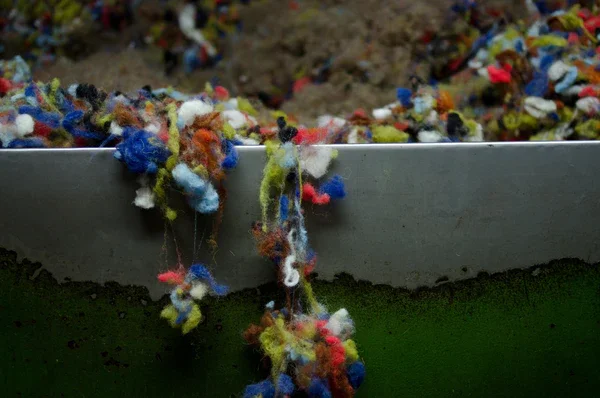
Tweeds are extra special because the dye is added at the earliest possible stage. For tweeds, fleece (or raw fibre) is dyed before its carded or combed and spun into yarns. Special yarn colours are blended by mixing different amounts of a variety of fleece colours. This produces a great depth and complexity of colour.

Dyed Fleece, ready to be carded and spun into tweed yarns

Tweeds are also traditionally made from wool, usually from the fleece of breeds of sheep that thrive in northern climates.

Cheviot Ewe and Lamb

Their wool is stronger and thicker and produces fabrics that wear well and will keep you warm and dry in cooler, damper conditions.

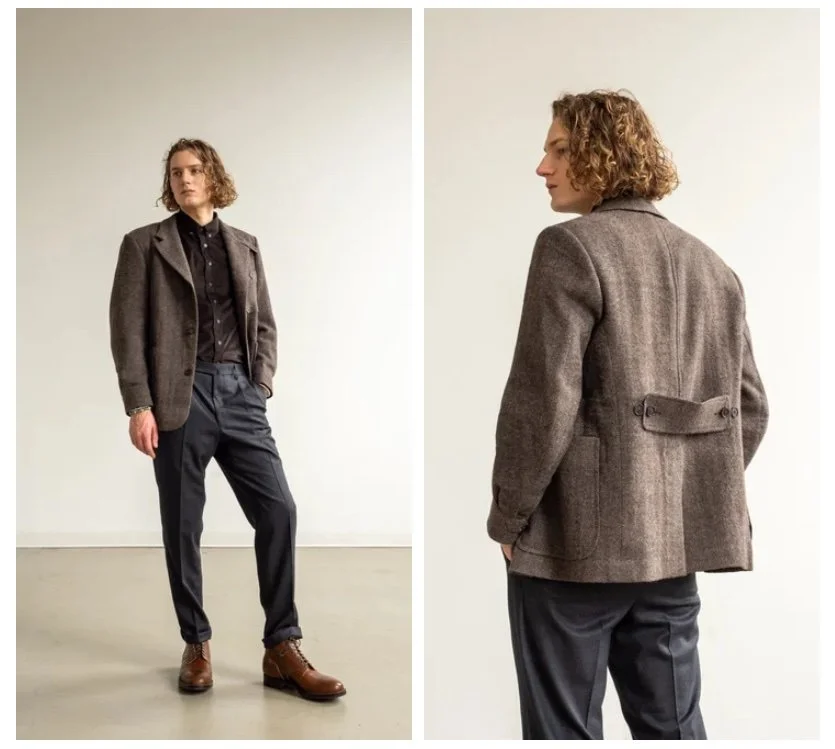
Sparks in a Harris Tweed Blazer